





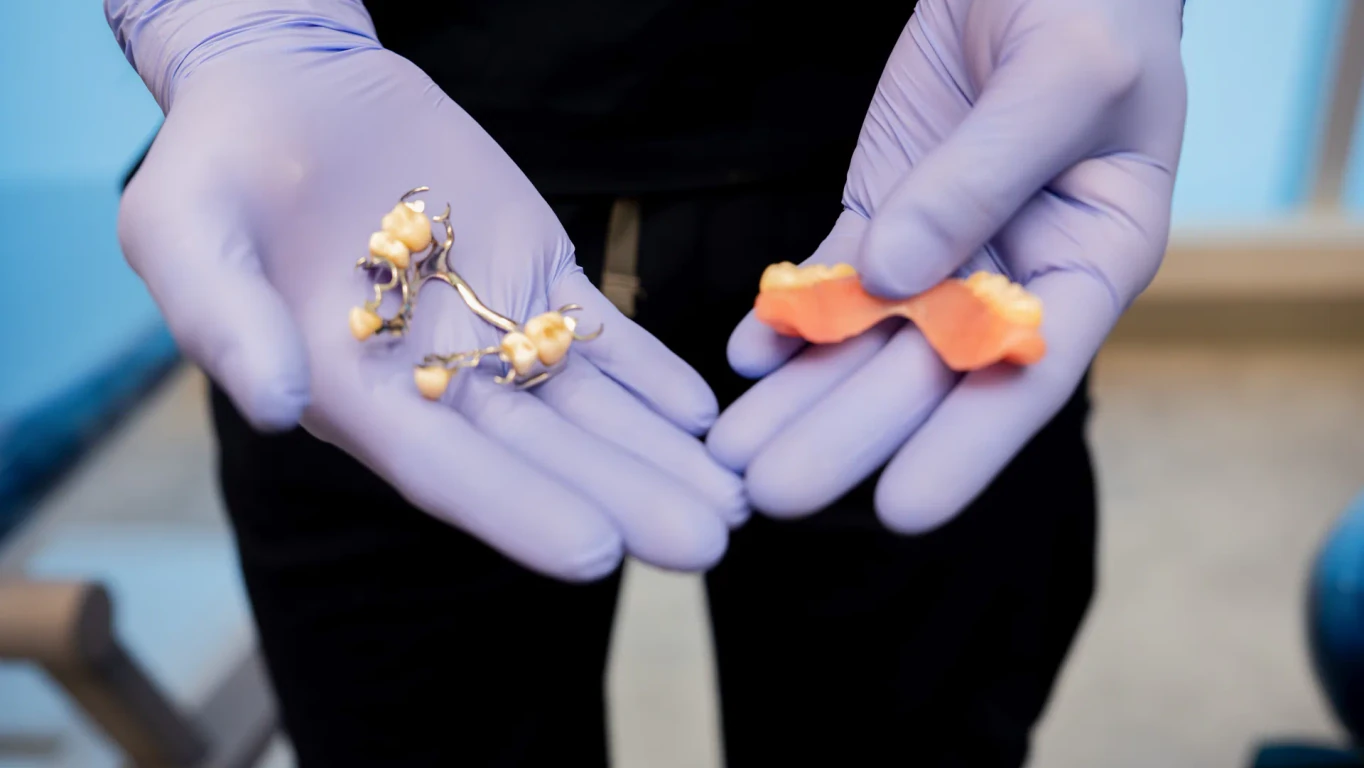
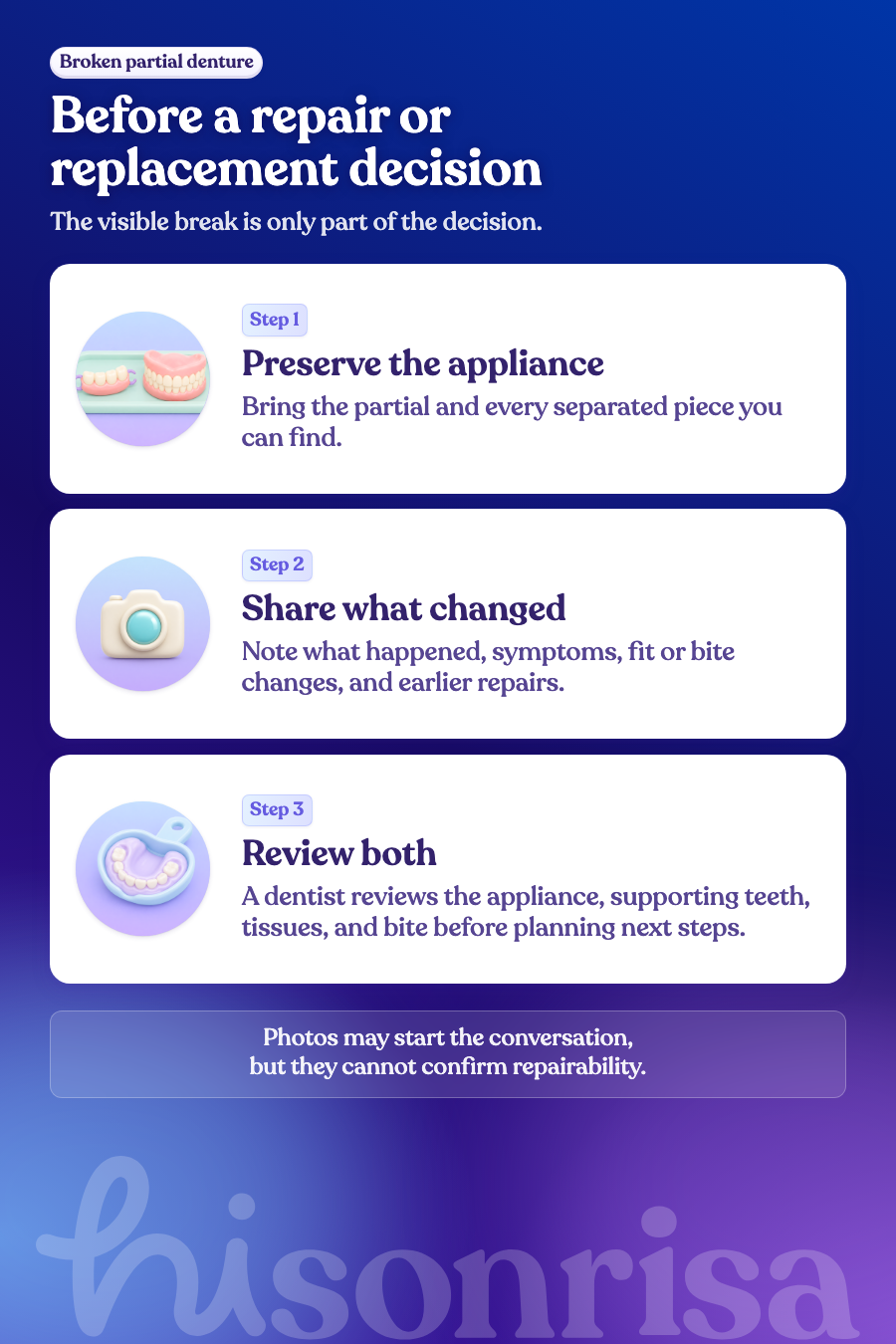
If your removable partial denture has cracked, lost an artificial tooth, or stopped fitting normally before a Mexico City trip, keep the appliance and every piece you can find. Do not force it back into place or try to glue, bend, file, or heat it. A dentist needs to examine both the partial and your mouth before deciding whether repair, adjustment, redesign, or replacement makes sense.
If you are considering care in Mexico City, you can review hisonrisa’s partial-denture evaluation and treatment options. The visible break is only part of the decision. Fit, support, your bite, the condition of the remaining teeth and gums, the material, and previous repairs may all change the plan.
First check what came out
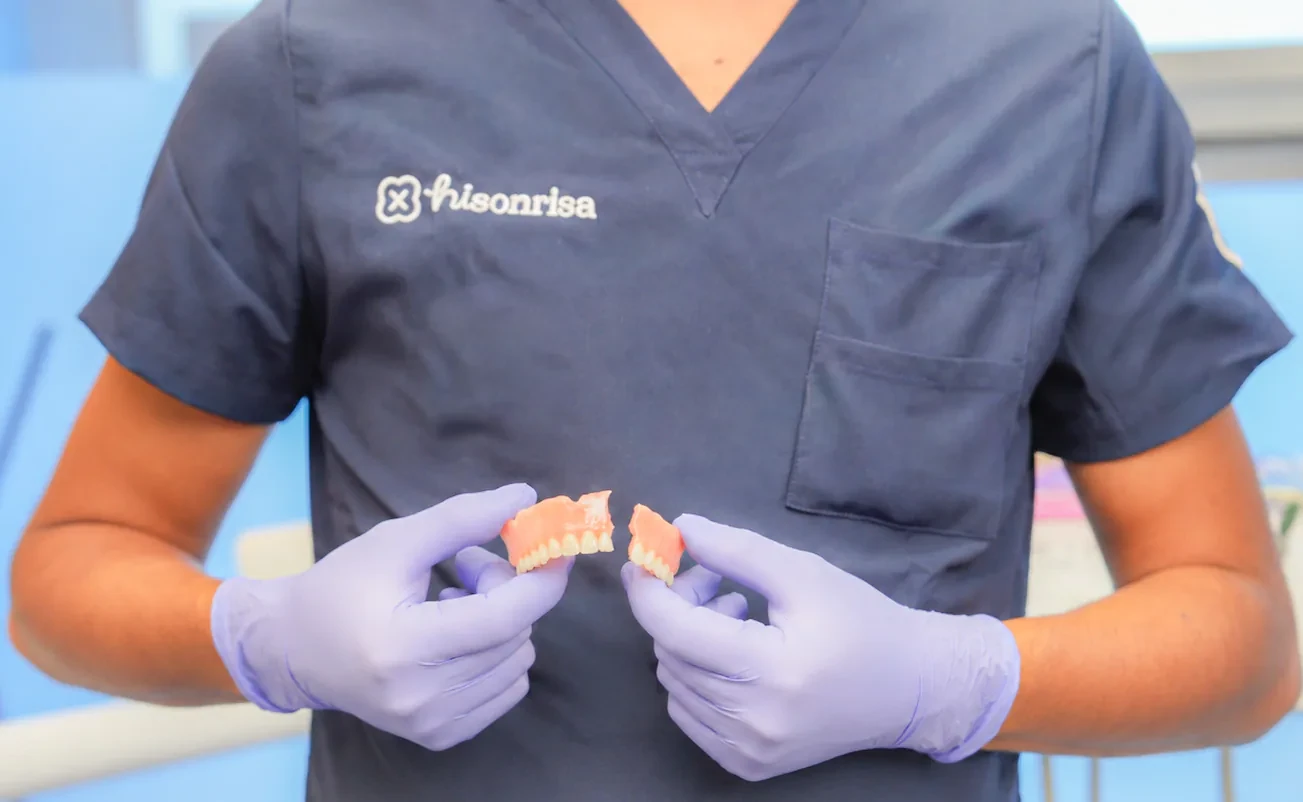
“My tooth fell out” can mean two very different things. If an artificial tooth detached from the removable partial, keep it with the appliance. It may give the dentist useful information about the failure, although saving it does not mean it can always be reused.
A natural permanent tooth knocked out after a fall or impact follows a separate, time-sensitive dental-trauma pathway. If the object may be one of your natural teeth, do not rely on instructions for an artificial denture tooth; contact a dentist promptly for the right next step.
When you are unsure, look at the partial without putting it back in your mouth. Check whether the empty space is in the pink base or framework and whether a clasp or another component is missing. A clear photo can help you describe the problem, but it does not establish a diagnosis.
What to do with a broken partial denture
Collect the appliance and any separated pieces. Keep them together in a clean, protective container and away from heat while you arrange advice. If a piece is unaccounted for, mention that when you contact the dental team instead of assuming it was harmless or simply lost.
Avoid testing the partial by biting it into place. A distorted base, clasp, or framework may no longer follow its usual path, and added pressure could damage the appliance or irritate tissue. If it no longer seats as it normally did, leave the fit question for a professional assessment.
Household glue is not suitable for denture repair. It can hold components in the wrong position, bond oral tissues, or make later evaluation more difficult. Filing a rough edge, bending a clasp, drilling the base, heating the material, or following a repair-kit technique can also erase or alter details the dentist or laboratory needs to inspect.
Make a short note about what happened. Include when the break occurred, whether the partial fell or was involved in facial trauma, any pain or irritation, whether your bite changed, and whether the appliance still seats normally. Its approximate age, known material, and history of earlier repairs may also help, but no single detail settles the treatment decision.
When to seek urgent help
Most damaged partial dentures call for dental assessment, not an automatic trip to the hospital. Seek emergency medical help through the appropriate local service for difficulty breathing, choking or respiratory distress after possible aspiration, uncontrolled heavy oral bleeding, severe swelling affecting the airway, or serious facial or jaw trauma.
Ask for prompt dental advice if the partial hurts, has a sharp edge, injures tissue, feels loose or displaced, or no longer fits normally. Do not force it into place or keep using it when it changes your bite. Ask the dentist whether you can safely wear it while awaiting assessment.
If a piece is missing and may have been swallowed or inhaled, tell a medical professional what happened. Partial-denture and metal components can be sharp or irregular, and the appropriate response depends on the object and symptoms. Do not assume an unknown fragment will pass without a problem, and seek emergency help for breathing symptoms.
What the dentist checks
A crack that looks small may be connected to a broader fit or support problem. The dentist may need to identify the failed component, check whether the base or framework is distorted, see how the partial seats, test its stability, and review how the upper and lower teeth meet. Material and design matter, but appearance alone may not identify either one reliably.
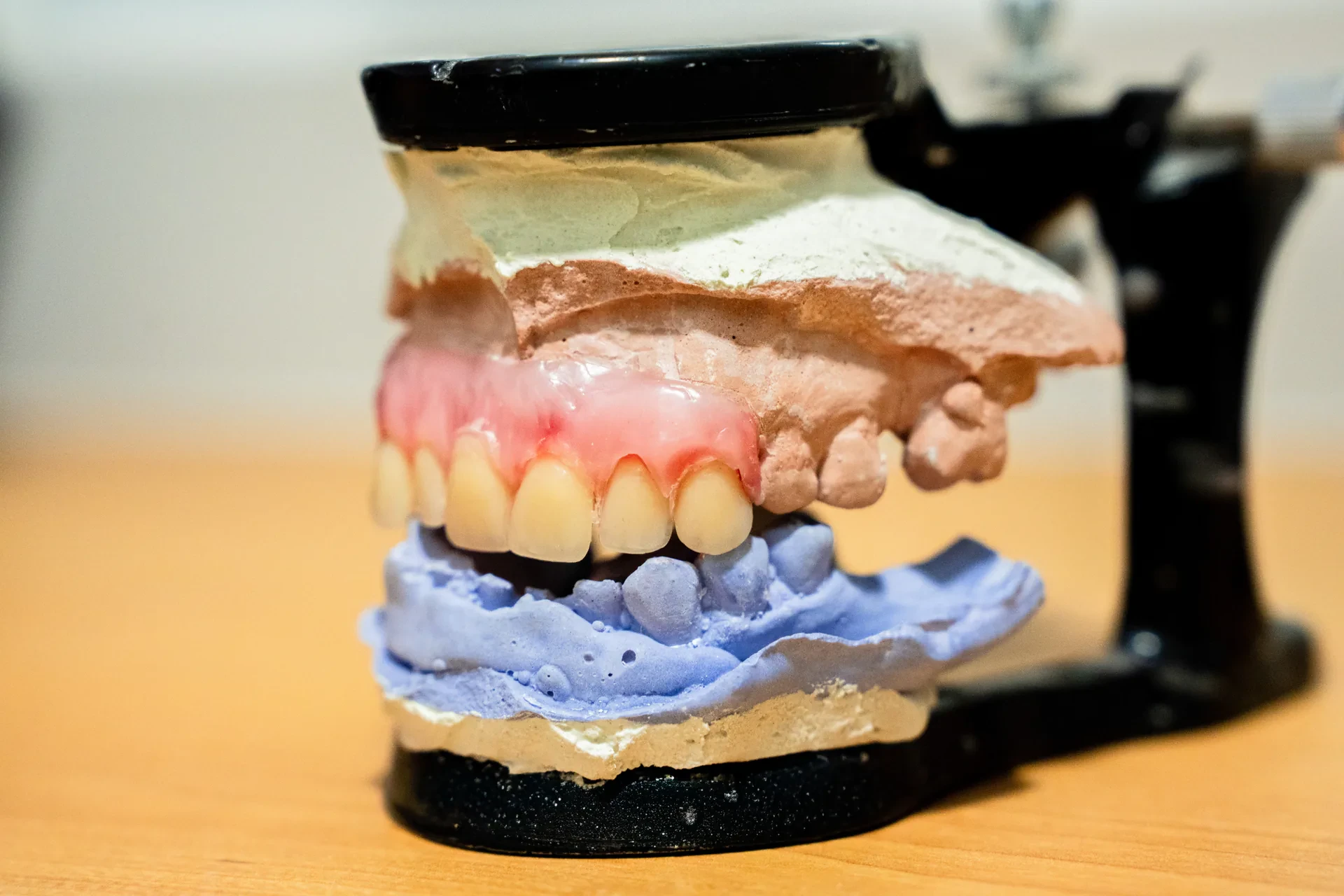
The supporting teeth, gums, and other soft tissues matter just as much. Teeth may have moved, become loose, developed decay, or changed after dental treatment. The shape of the supporting area may also have changed. That is why removable partial-denture planning involves more than attaching a loose piece.
Not every broken partial requires a new X-ray. A dentist may consider imaging after reviewing the history and clinical findings, particularly when trauma, pain, swelling, tooth mobility, supporting teeth, periodontal concerns, unexplained bleeding, or a possible foreign object could affect care.
A repeated fracture deserves a wider look too. It does not prove that the patient misused the appliance, that age caused the break, or that a previous dentist or laboratory made a mistake. It means the next plan should consider the partial, the mouth, the bite, and the pattern of earlier problems together.
When repair or replacement may be possible
After the examination, the conversation may include reattaching an artificial tooth, adjusting the appliance, repairing part of the base, addressing a clasp or framework, relining or rebasing the partial, adding a prosthetic tooth, redesigning it, or replacing it. Which paths are realistic depends on the material, distortion, supporting teeth and tissues, laboratory requirements, and previous repairs. Ask which options the clinic can assess and which may require laboratory work.
A reline or rebase is not another name for fixing a fracture. Those procedures change how parts of the denture base relate to the supporting tissues, while a fracture may involve a different component. The age of a partial is also one factor among many, not an automatic expiration date.
Material rules need the same restraint. A metal framework is not automatically impossible to repair, and an acrylic fracture or detached artificial tooth is not automatically repairable. Laboratory research shows that materials and techniques behave differently, but it cannot predict comfort, durability, or success for one patient.
What to send before your Mexico City visit
Ask the clinic what it needs to review before you travel. If it requests photos, show the whole appliance, both surfaces, the damaged area and any pieces that came off. Describe what happened and mention any symptoms.
Photos cannot test fit, stability, pressure on the gums or the bite. The dentist needs to examine the appliance and your mouth before confirming treatment, cost or timing.
Gather any recent relevant X-rays, previous dental or laboratory records, the approximate date the appliance was made, and your expected travel dates. These details can make a preliminary conversation more useful, but they do not confirm that care can be completed during one trip. The final plan and timing depend on the clinical review and any laboratory coordination that may be needed.
Frequently asked questions
Is a broken partial denture urgent?
It depends on the symptoms, the missing component, and whether there was trauma. Breathing difficulty, possible aspiration with respiratory symptoms, uncontrolled heavy bleeding, severe airway-related swelling, or serious facial or jaw injury needs emergency medical attention. A sharp, painful, unstable, tissue-injuring, non-seating, or bite-altering partial needs prompt dental advice, while not every small crack is a hospital emergency.
Can a broken partial denture or detached denture tooth be repaired?
Sometimes, but the break alone does not provide the answer. The dentist needs to assess the failed component, material, distortion, previous repairs, fit, support, bite, oral tissues, and supporting teeth. Keeping every piece helps the evaluation but does not confirm that it can be reused.
Should I stop using or chewing with a broken partial denture?
Do not force in a partial that is sharp, painful, loose, unstable, displaced, injuring tissue, changing your bite, or no longer seating normally. No universal rule covers every minor defect, so ask a dentist about the component, fit, symptoms, and risk of further damage or dislodgement rather than assuming limited use is safe.
Can photos determine whether it needs repair or replacement?
No. Photos can show visible damage and support a preliminary conversation, but they cannot test the fit and bite, examine supporting teeth and tissues, identify every material, or reveal hidden disease. Final planning may require an in-person examination and, when clinically indicated, imaging.
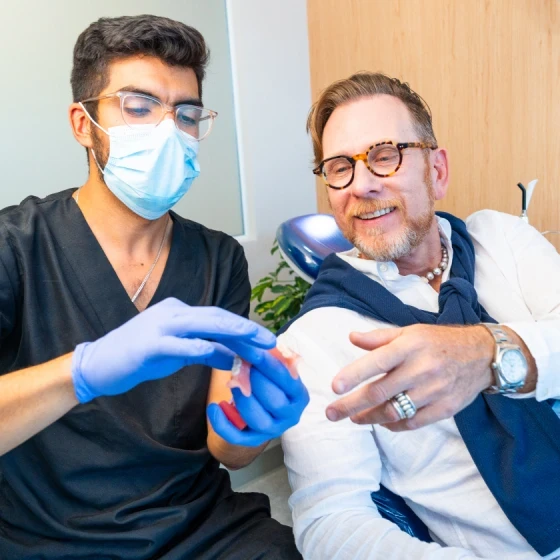
If you want the appliance and your mouth assessed, you can book an appointment with hisonrisa in Roma Sur. Bring the partial and all pieces you still have, and share any relevant records or travel dates when you contact the team.
This article provides general dental information and does not replace a dental evaluation, diagnosis, or any imaging or review a dentist determines is needed.