







Some sensitivity after whitening is temporary. Mild, brief sensitivity across several teeth that is improving calls for a different response from strong, localized or worsening pain.
If you already have pain, pause before applying more product and use the symptom guide below. If you are planning treatment in Mexico City, the professional whitening page explains the service and evaluation.
How long can sensitivity after whitening last?
The American Dental Association’s whitening overview describes sensitivity as generally mild and temporary. For strip- or tray-based treatments, it reports that symptoms usually resolve by the fourth day after treatment. That observation does not cover every whitening method or explain the cause of pain in one person.
Do not wait for a set number of days if pain is strong, centered in one tooth, worsening or accompanied by warning signs. Contact a dentist about symptoms that are not improving.
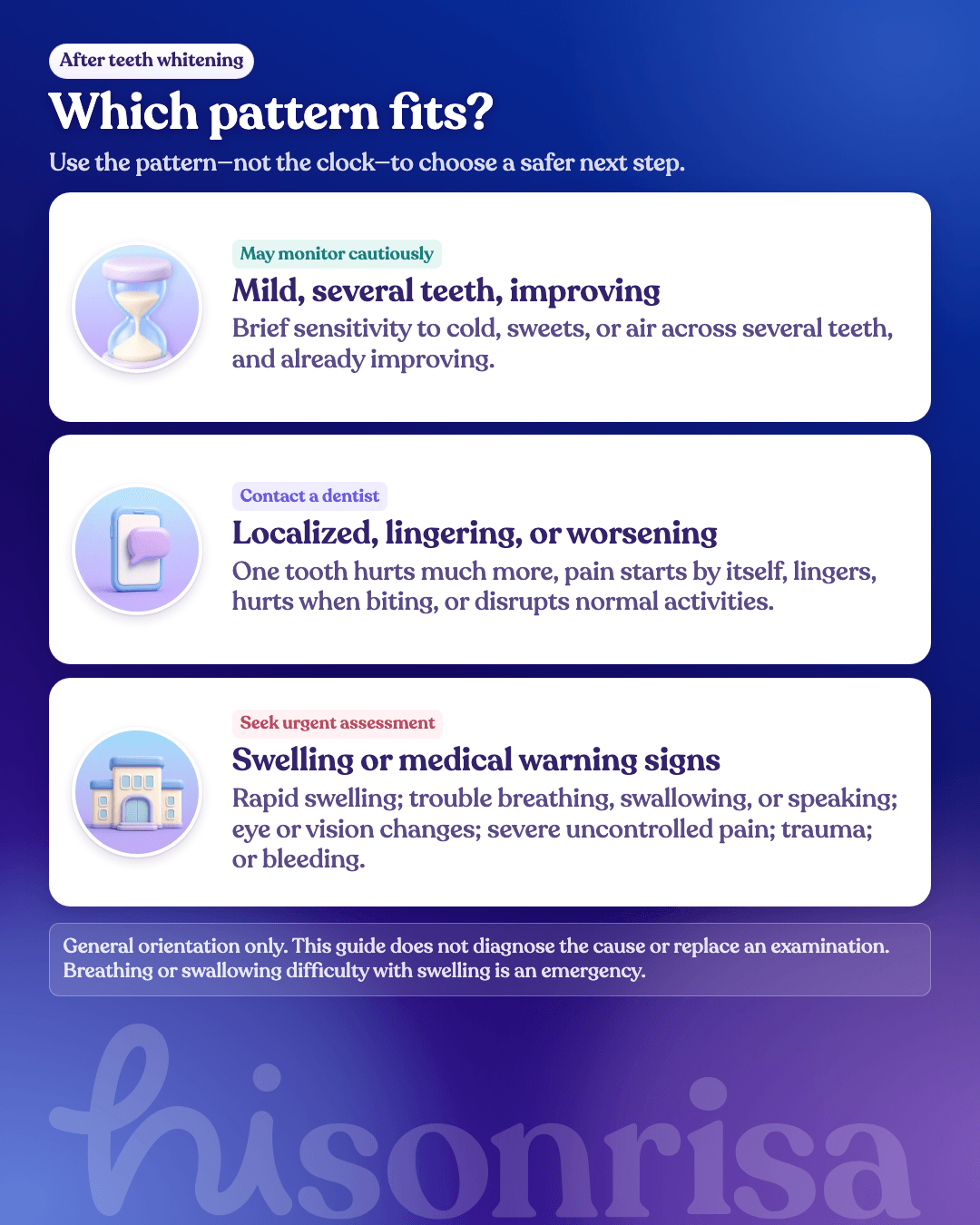
When sensitivity is improving and when to call a dentist
This comparison cannot diagnose the cause. It can help you recognize when cautious monitoring may be reasonable and when a dental assessment makes more sense.
| May be reasonable to monitor cautiously | Contact a dentist |
|---|---|
| Sensitivity is mild and manageable | Pain is strong, worsening, or disrupting normal activities |
| Several teeth feel sensitive | One tooth hurts much more than the others |
| Cold, sweets, or air cause a brief sensation | Pain starts without a trigger, lingers, or appears when you bite |
| The symptom began during or soon after whitening | There is no clear improving trend |
| It improves after whitening is paused or completed | There is marked gum irritation, product overuse, or an unknown product strength |
| There is no swelling, feverish illness, trauma, or breathing or swallowing problem | The symptom interferes with eating, drinking, or sleeping |
A mild, generalized, trigger-related pattern that is already improving may fit commonly reported whitening sensitivity. It does not prove that the teeth are healthy or that whitening is the only possible cause.
Why whitening can cause sensitivity
Whitening products use peroxide compounds to interact with pigments inside the tooth. During that process, some people experience a temporary sensitivity response. Concentration, contact time, application frequency, tray fit, and sensitivity before treatment can all affect the experience.
The labels “professional” and “at home” do not predict exactly how you will feel. Either approach can cause sensitivity, and the evidence does not support a blanket claim that every professional treatment is more comfortable or every over-the-counter product is worse. The specific product and how it is used matter.
Sensitivity alone also does not prove that whitening permanently damaged the enamel or injured a nerve. Explanations such as “the enamel pores opened,” “the teeth became weak,” or “the tooth is only dehydrated” make a complex response sound more certain than it is.
Whitening gel can irritate the gums when it reaches the tissue. Excess gel, product placement, or tray fit may contribute. Pronounced burning, sores, worsening tissue changes, or irritation that does not settle should be discussed with a dentist rather than diagnosed from a photograph.
What to do when sensitivity starts
If sensitivity begins during a whitening session, stop or pause that session and follow the product instructions. Do not add more gel, extend the wear time, combine products, or repeat the application to finish faster. If symptoms are significant, unusual, or worsening, pause further whitening until you receive appropriate advice.
Temporarily avoiding an obvious trigger, such as an ice-cold drink, may make you more comfortable. Continue gentle oral hygiene. These steps can reduce irritation, but they do not treat a crack, cavity, gum problem, or another condition that may be causing pain.
Some sensitivity toothpastes or desensitizing ingredients help in certain whitening protocols and not in others. That evidence is too variable to promise that one product will prevent or stop symptoms. Ask a dentist whether a sensitivity or fluoride strategy fits your situation after they know what you used and what the examination shows. Do not start a medication schedule or take pain medicine before every whitening session based on generic online advice.
If you want to whiten again, do not create your own lower concentration, shorter wear time, or every-other-day schedule. Product instructions differ. A plan that accounts for the product, tray fit, and your previous reaction belongs in a separate whitening evaluation at hisonrisa.

When the pain is in one tooth
Whitening sensitivity is often described across more than one tooth. A clearly localized symptom deserves more caution because whitening does not rule out an unrelated problem in that tooth.
Contact a dentist if one tooth hurts substantially more than the others, pain begins on its own, temperature pain continues after the trigger is gone, or biting and chewing hurt. The same applies when symptoms are getting stronger, are not showing improvement, or interfere with eating, drinking, sleep, or normal activity.
These details do not tell you whether the cause is decay, a crack, recession, a restoration, irritation inside the tooth, or something else. Brief electric sensations sometimes called “zingers” can occur after whitening, but the nickname should not be used to dismiss severe, repeated, localized, or worsening pain.
Product history matters too. Tell the dentist if you used more product, wore it longer, applied it more often than directed, or do not know the concentration. Also mention sensitivity that existed before whitening, exposed roots, gum problems, restorations, or recent trauma.
When to seek urgent care
Seek emergency medical care for trouble breathing, swallowing or speaking, substantial swelling affecting the airway, swelling near the eye or vision changes, major facial trauma, or bleeding that will not stop. Severe uncontrolled pain, rapidly increasing swelling, feverish illness or rapid deterioration also need urgent assessment. These signs can have a cause other than whitening.
If you are traveling, seek appropriate care where you are rather than waiting only to reach Mexico City when urgent warning signs are present.
What a dentist may check
The appointment is meant to separate a temporary sensitivity response from a problem that needs different care. A dentist may ask which product or professional procedure was used, its peroxide concentration if known, how much was applied, how long it stayed on, and how often you used it.
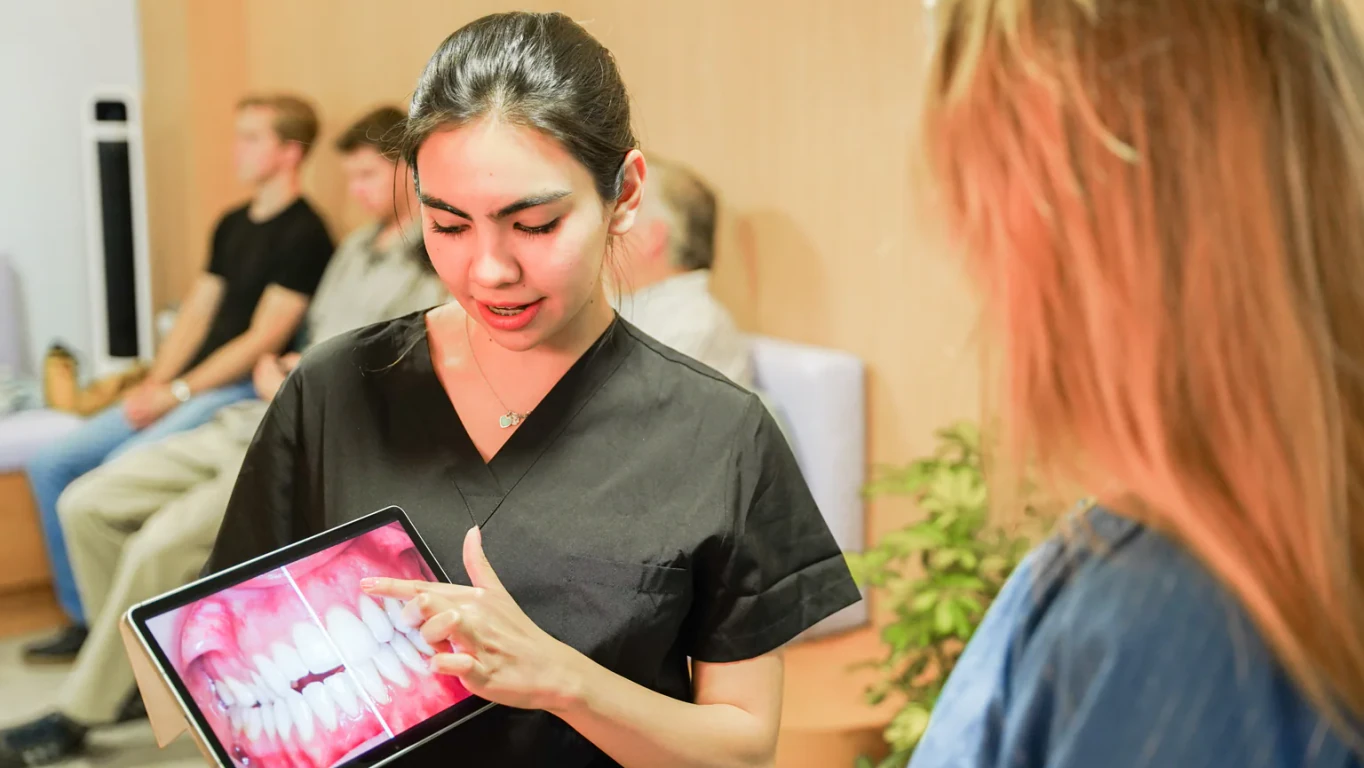
They will also want to know when the symptom began, whether one tooth or several teeth are involved, what triggers it, and whether it is improving. Tray fit, gel contact with the gums, sensitivity before whitening, exposed roots, restorations, bite changes, and recent trauma may all be relevant.
The examination may include the gums, tooth surfaces, restorations, bite, and areas where you feel pain. Vitality testing or dental imaging may be considered when the history and examination make them appropriate; neither is automatic for every patient.
The findings determine the next step. Persistent pain does not automatically mean that you need a filling, crown replacement, or root canal treatment.
What to send before your appointment in Mexico City
Clear details can make the first conversation more useful. If available, prepare:
- a photo of the whitening product or packaging;
- the peroxide concentration;
- when whitening began and when you last applied it;
- how long and how often you used it;
- where the symptom is located;
- what triggers it and whether the pain lingers;
- whether it is improving, unchanged, or worsening;
- photos of visible gum changes;
- relevant dental records or previous X-rays; and
- your travel dates, if they affect planning.
Photos can identify the product or show visible gum changes. Bring them as context for the examination.
hisonrisa is located at Tepic 139-706 in Roma Sur, Mexico City, and can communicate in English and Spanish. Travel dates can help with planning, but they should not delay locally appropriate urgent care.
Frequently asked questions
How can I tell whether sensitivity after whitening may be expected?
A mild sensation across several teeth, mainly triggered by cold, sweets, or air and already improving after whitening is paused or completed, may fit commonly reported temporary sensitivity. Strong, localized, spontaneous, lingering, biting, or worsening pain deserves dental advice. This distinction guides the next step; it is not a diagnosis.
How long can sensitivity after whitening last?
Sensitivity is usually temporary. The American Dental Association reports that strip- or tray-related symptoms usually resolve by the fourth day after treatment, but this does not apply to every method or person. Strong, localized, worsening or persistent symptoms need dental advice; do not use that duration as a reason to delay care.
When should I call a dentist about pain after whitening?
Call when one tooth hurts much more than the others, pain starts without a trigger, temperature pain lingers, biting hurts, symptoms are worsening or not improving, the gums have substantial irritation, or discomfort interferes with normal activities. Swelling, significant illness, trauma, uncontrolled pain, or breathing and swallowing problems may require urgent or emergency assessment.
Should I stop whitening if my teeth hurt?
Pause the active session and follow the product instructions. Do not increase the strength, amount, frequency, or exposure time. If pain is significant, unusual, or worsening, pause further applications and obtain advice before resuming. There is no single restart schedule for every product.
What can a dentist check when pain continues after whitening?
A dentist may review the product and exposure, symptom location and triggers, gum condition, previous sensitivity, restorations, tooth structure, bite, and recent trauma. Testing or imaging is used only when indicated. The purpose is to examine the possibilities without guessing from symptoms alone.
Can photos determine why a tooth hurts after whitening?
No. A photo may show the product or a visible gum change. It cannot reliably reveal cracks, decay between teeth, the condition inside a tooth, bite contacts, or the cause of pain. Photos and chat can help with preliminary orientation but do not replace an examination.
What should I send before booking if I am traveling to Mexico City?
Send the whitening date and method, product packaging and concentration if known, application schedule, symptom location, triggers, trend, relevant photos or records, and travel dates. If you have urgent warning signs, arrange appropriate care where you are rather than waiting only for the trip.
If pain is localized, persistent, worsening, or otherwise concerning, you can book an appointment for an evaluation. Sharing the product and symptom details in advance can help the team understand the situation, but the final assessment depends on the clinical findings.
This article provides general dental information. It does not replace a dental evaluation, diagnosis, or any imaging or clinical review a dentist considers necessary.