




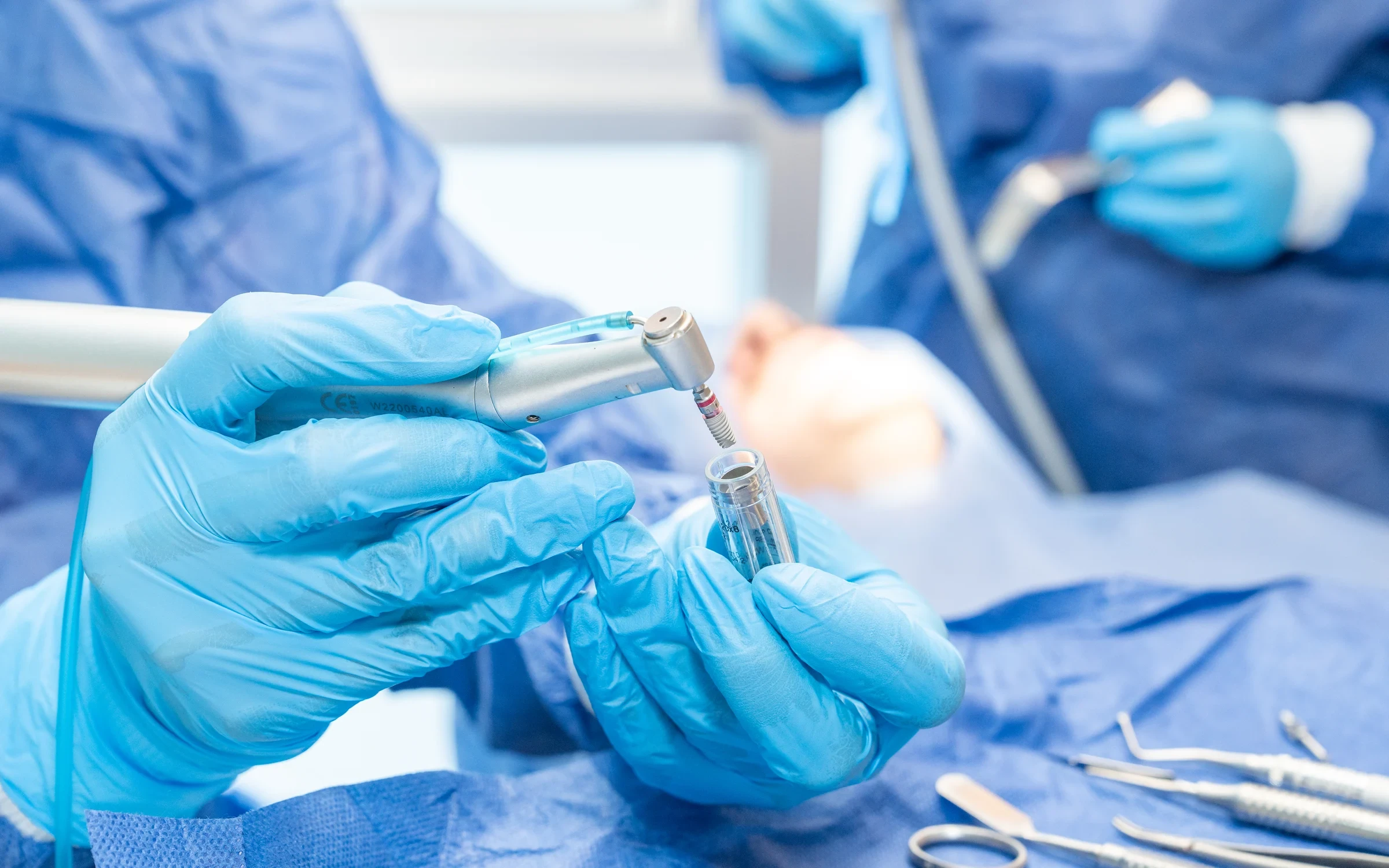
Your surgeon's instructions come first
These instructions are general guidance for dental implant surgery aftercare. Your surgeon's written instructions come first, especially if your visit included extraction, bone grafting, a sinus lift, immediate implant placement, stitches, a healing cap, or a temporary tooth.
Do not chew directly on the implant site or temporary tooth unless your dentist has cleared it. Feeling comfortable does not mean the implant is ready for normal biting pressure.
Tell us if you smoke or vape, take medication that affects bleeding or healing, have diabetes, are immunocompromised, or plan to travel soon. These details can change follow-up timing.
Only had a tooth removed, without implant placement? Use our tooth extraction aftercare guide instead.
Seek urgent medical care if you have trouble breathing or swallowing, rapidly worsening swelling of the face or neck, uncontrolled bleeding, or a reaction to medication such as swelling of the lips or tongue.
Quick answers
After dental implant surgery, the first goal is to protect the surgical site and avoid pressure on the implant. Rest, keep your head slightly elevated, follow medication and rinse instructions exactly, eat soft foods, and do not smoke, vape, or chew over the implant site. Message hisonrisa if bleeding is heavy, swelling spreads, pain worsens, fever or pus appears, or anything feels loose.
First 24 hours
Rest, keep your head slightly elevated, use gauze only if instructed, and avoid disturbing stitches, graft material, healing caps, or a temporary tooth.
Avoid implant pressure
Do not test the implant with hard food, finger pressure, tongue pressure, or chewing force. Follow your temporary-tooth instructions exactly.
Clean carefully
Brush the rest of your teeth gently. Clean near the implant only the way your dentist showed you.
Message if anything feels loose
A loose healing cap, temporary tooth, component, stitch, or unusual graft concern should be checked before you keep chewing or travel.
Share travel dates early
Tell us if you are flying or leaving Mexico City soon. Bleeding, swelling, sedation, grafting, sinus lift, temporary components, and review access can all change the recommendation.
Hygiene, medication, travel, and photo triage
Keep the implant area clean without disturbing it, follow medication instructions carefully, and send useful details if anything changes.

Hygiene
- Brush the rest of your teeth gently unless your dentist told you otherwise.
- Clean near the implant only the way your dentist instructed.
- Do not poke around a healing cap, graft, membrane, stitches, or temporary tooth.
- Use prescribed rinse or chlorhexidine only as directed.
- Do not use a water flosser, syringe, interdental brush, or cleaning tool near fresh surgery unless your dentist told you to.

Medication and health conditions
- Take medication exactly as prescribed or directed by your dentist.
- Do not change the dose, stop antibiotics early, stop blood thinners, or start new medication without checking if you are unsure.
- Tell the clinic before taking anything new if you are pregnant, have allergies, kidney or liver disease, stomach ulcers, diabetes, blood-thinner medication, or another condition that affects medication safety.
- If you smoke, vape, or use tobacco, tell us. Smoking is one of the details that can change implant healing and follow-up conversations.

Flying or leaving Mexico City soon
- Tell us your departure date before surgery or as soon as your plans change.
- Do not use a fixed number of days as travel clearance: bleeding, swelling, sedation, grafting, sinus lift, healing caps, temporary teeth, provisional components, and whether you can return for review all change the answer.
- Same-day travel is not ideal if bleeding is active, sedation was used, grafting or sinus lift was performed, or a temporary tooth needs review.
- Sip fluids regularly while healing, especially if you are traveling. Avoid alcohol while symptoms are active or medication instructions limit it.
- Remote photo review can help us decide next steps, but it does not replace an exam when infection, loosening, bleeding, or graft problems are possible.

Photo triage
- Send one close-up photo in good light without pulling the cheek open aggressively.
- Send one wider photo showing nearby teeth if you can do that comfortably.
- Send a front-facing photo only if facial swelling is visible.
- Tell us the surgery date, implant area, pain level, whether bleeding is active, whether there is bad taste or odor, and whether anything feels loose.
- Do not probe, twist, scrape, or open the implant site with a tool to get a better photo.

What happens between implant phases
- After surgery, the priority is protected healing, not testing the implant.
- During the first week we watch bleeding, swelling, pain trend, tissue closure, and whether any healing cap or temporary tooth feels stable.
- During integration, we may ask for symptom updates, photos, an in-person review, X-rays, or other records before moving toward the final crown or final restoration.
- Planning, cost, candidacy, CBCT, graft/sinus planning, and full-arch treatment comparisons belong on the implant planning pages.
Use the right planning page
- Use this guide for aftercare after implant surgery.
- For one tooth or tooth-by-tooth implant planning, use the dental implants page.
- For a full arch or provisional full-arch bridge, use the All-on-4, All-on-6, or full-arch aftercare pages.
Follow the stage you are on
Use the section that matches your recovery stage. Implant aftercare is different from extraction-only aftercare because the implant needs calm soft tissue and months of protected bone integration.

Protect the surgical site
The first day is about keeping the implant area calm. If a graft, membrane, healing cap, or temporary tooth was placed, avoid disturbing it while swelling and clotting settle.
- Rest as much as possible.
- Keep your head slightly elevated.
- Use gauze only if your dentist instructed it.
- Take medication exactly as prescribed or directed.
- Use a cold pack on the outside of the face if your dentist recommended it.
- Keep your tongue, fingers, toothbrush bristles, and tools away from the implant site.
- Keep any temporary tooth or appliance out of pressure unless your dentist told you otherwise.
- Choose cool or room-temperature soft foods.
- Try yogurt, applesauce, mashed potatoes, eggs, oatmeal, soft pasta, avocado, or blended soup that is not hot.
- Drink water regularly.
- Use a spoon for smoothies or shakes.
- Chew on the opposite side if chewing is comfortable and your dentist allows it.
- Smoking, vaping, or tobacco.
- Straws.
- Alcohol if it conflicts with medication or healing instructions.
- Forceful rinsing or spitting.
- Heavy exercise, heavy lifting, or sports.
- Hot drinks, carbonation, crunchy, spicy, seeded, chewy, sticky, or hard foods.
- Touching, twisting, or testing a healing cap, temporary tooth, or implant area.
- Light bleeding or pink saliva.
- Mild to moderate soreness.
- Numbness while anesthesia wears off.
- Swelling starting.
- Stitches, a healing cap, or a temporary tooth feeling noticeable.
- Bleeding stays active after firm gauze pressure as instructed.
- Swelling increases quickly.
- Pain feels severe or unusual.
- A healing cap, temporary tooth, or stitch feels loose.
- You have trouble breathing or swallowing.
- Medication causes rash, swelling, or breathing symptoms.

Swelling can peak
Some swelling, bruising, jaw stiffness, or soreness can feel stronger during the first few days. The goal is stable or improving symptoms while the implant site stays protected.
- Continue soft foods if chewing feels uncomfortable.
- Keep chewing away from the implant site.
- Brush your other teeth gently.
- Use any rinse or mouthwash only as instructed.
- Keep the area clean without poking around the implant, healing cap, graft, or stitches.
- Tell us if you plan to travel or fly soon after surgery.
- Stay with soft foods if chewing feels uncomfortable.
- Add soft protein when tolerated, such as eggs, soft fish, yogurt, or blended beans.
- Keep avoiding seeds, chips, nuts, popcorn, crunchy bread, chewy foods, sticky candy, spicy foods, alcohol, carbonation, and straws.
- Smoking, vaping, or tobacco during early healing.
- Heavy exercise if bleeding, swelling, or dizziness continues.
- Chewing directly on the implant site or temporary tooth.
- Moving a healing cap, temporary tooth, component, stitch, membrane, or graft with your tongue or fingers.
- Stopping antibiotics, blood thinners, or prescribed medication on your own.
- Swelling that feels stronger than day 0.
- Jaw stiffness.
- Bruising.
- Soreness when opening wide.
- A mild taste that does not come with worsening pain or pus.
- Pain gets stronger instead of stabilizing.
- Swelling spreads quickly or feels worse after day 3 or 4.
- You notice fever, pus, strong bad taste, or strong odor.
- Bleeding becomes heavy again.
- Anything at the implant site feels loose.
- You feel unwell or cannot drink fluids.

Symptoms should trend better
By days 4-7, many patients feel improvement. Do not use that improvement to test the implant with harder chewing or biting pressure.
- Keep chewing away from the implant site.
- Return to more texture only if your dentist allows it.
- Continue careful cleaning without poking the area.
- Follow any scheduled review or photo check.
- Tell us before using a water flosser, syringe, or cleaning tool near fresh implant surgery.
- Message us if food keeps trapping and gentle cleaning does not help.
- Add softer solid foods when chewing feels comfortable and your dentist allows it.
- Cut food into smaller pieces.
- Avoid chips, nuts, seeds, popcorn, crusty bread, hard candy, sticky candy, chewy foods, and tough meat.
- Stop and go back to softer food if chewing increases pain.
- Gradual soreness.
- Soft tissue that still looks different from nearby gum.
- Mild jaw stiffness.
- Tenderness while chewing away from the implant site.
- Stitches that feel noticeable if they were placed.
- Pain gets worse instead of better.
- Bad taste or bad smell appears with increasing pain.
- Swelling gets worse after day 3 or 4.
- You notice fever or pus.
- You think the healing cap, temporary tooth, component, or stitches are loose.
- Numbness, tingling, or altered sensation persists or worries you.

The gum may look better before the implant is ready
Soft tissue often improves before the bone has finished integrating around the implant. Follow-up matters even when the area feels normal.
- Keep the area clean as instructed.
- Attend follow-up visits or photo reviews if scheduled.
- Follow appliance, night guard, retainer, or temporary tooth instructions exactly.
- Ask before returning to heavy chewing on the implant side.
- Tell us if you are leaving Mexico City and still have symptoms or a temporary component.
- Assuming normal comfort means the implant is ready for a crown.
- Testing the implant with hard food, finger pressure, or tongue pressure.
- Skipping review visits because the gum looks closed.
- Smoking or vaping during the healing phase unless your clinician has cleared it.
- Mild tenderness.
- A gum contour that looks different from nearby teeth.
- Stitches dissolving or loosening if dissolvable stitches were used.
- Feeling mostly normal while bone integration continues.
- Pain is not improving.
- Swelling returns or increases.
- You notice pus, fever, bad smell, or bad taste.
- Your bite feels different and uncomfortable.
- Any implant component or temporary tooth feels loose.
Bone integration takes time
Osseointegration is the phase where bone stabilizes around the implant. It can take several months, and the exact timing depends on bone quality, grafting, implant position, medical history, smoking exposure, and the treatment plan.
- Keep regular implant review visits.
- Follow your timeline for component review, scan, impression, or final crown appointments.
- Keep the implant area and surrounding teeth clean.
- Tell us before you move, travel long term, or cannot return for scheduled review.
- Ask before changing appliances, retainers, or night guards that touch the implant area.
- Chewing hard items such as ice, hard candy, or very tough foods on the implant side before clearance.
- Skipping maintenance visits.
- Using over-the-counter tools to tighten or adjust anything.
- Assuming the final crown can be placed just because the area is comfortable.
- Comfort improving while the implant is still healing internally.
- Waiting months before the final crown, bridge, or restoration in staged cases.
- Additional appointments for component review, scanning, bite checks, or final restoration.
- You feel movement.
- Pain returns after a quiet period.
- The gum bleeds, swells, drains, or feels tender around the implant.
- A temporary tooth, healing cap, component, or appliance changes position.

Extra steps need extra protection
Implant visits can include extraction, bone grafting, membrane placement, PRF, sinus lift, immediate implant placement, a healing cap, or a temporary tooth. These details change how conservative your aftercare should be.
- Follow the exact instructions your dentist gave you for grafting, sinus lift, or temporary tooth care.
- Keep your tongue, fingers, toothbrush bristles, and tools away from the surgical area.
- Use any rinse, syringe, or cleaning tool only if you were instructed to use it.
- Keep follow-up appointments for graft, sinus lift, temporary tooth, or implant review.
- Send a clear photo if the area looks unusual, but do not pull the cheek open aggressively.
- Trying to remove graft particles, membrane material, or tissue.
- Digging out food with a tool.
- Chewing on a temporary tooth unless your dentist cleared that pressure.
- Smoking, vaping, or tobacco while the graft or implant site is healing.
- Blowing your nose or creating sinus pressure after sinus lift unless your surgeon has cleared it.
- A grafted or sinus-lift site may feel different from a simple implant placement.
- Stitches, membrane edges, or a healing cap can feel noticeable.
- Temporary teeth can feel different from final teeth.
- You see material coming out and are not sure whether it is graft, tissue, or food.
- The area feels unstable or opens suddenly.
- Pain, bad taste, bad smell, fever, or swelling is increasing.
- You are traveling soon and cannot return easily for review.
What to eat after dental implant surgery and what to avoid
Start soft and simple. Food should support healing without putting pressure on the implant site, graft, healing cap, or temporary tooth.

Yogurt.
Cool, smooth, and easy to swallow.

Applesauce.
Soft texture without chewing pressure.

Mashed potatoes.
Filling, gentle, and easy to control.

Scrambled eggs.
Soft protein when chewing feels comfortable.

Oatmeal.
Use warm, not hot, and keep it smooth.

Soft pasta.
Small bites with minimal chewing force.

Avocado.
Soft healthy fat, mashed or sliced gently.

Smoothies without a straw.
Drink from a cup or use a spoon.

Blended soups that are not hot.
Smooth and nourishing without heat.

Soft fish.
Tender protein once chewing improves.

Soft cooked vegetables.
Easy to mash and less likely to scrape.

Chewing on the implant site.
Pressure can disturb healing before the implant is ready.

Straws.
Suction can disturb early healing.

Chips.
Sharp edges can scrape the area.

Nuts.
Hard pieces can add pressure or get trapped.

Seeds.
Small particles can irritate the surgical area.

Popcorn.
Hulls can lodge near stitches or a healing cap.

Crunchy bread.
Crust can scratch and needs force.

Hard or sticky candy.
Pressure and pulling can disturb healing.

Spicy foods.
Can sting while tissue is tender.

Very hot drinks.
Heat can feel irritating and may worsen bleeding early.

Alcohol.
Can interfere with healing or medication instructions.
Eating by stage
Day 0: Cool or room-temperature soft foods. No straws, no hot liquids, and no crunchy, chewy, sticky, seeded, or spicy foods.
Days 1-3: Stay soft and chew away from the implant site. Keep pressure off healing caps, grafts, and temporary teeth.
Days 4-7: Add texture only if your dentist allows it. Go back to softer foods if chewing increases soreness.
Integration months: Comfort does not mean the implant is ready for hard chewing or the final crown. Follow your loading timeline.

Loose components, infection signs, and warning symptoms
Contact hisonrisa promptly, or seek urgent medical care if symptoms feel severe or unsafe.
- You have trouble breathing.
- You have trouble swallowing.
- Facial, jaw, or neck swelling is spreading quickly.
- Bleeding does not slow with firm pressure as instructed.
- You feel seriously ill.
- You have swelling of the lips or tongue, rash, wheezing, or breathing symptoms after medication.
- The implant, healing cap, temporary tooth, cover component, or stitches feel loose.
- Pain gets stronger instead of improving.
- You notice strong bad taste, bad smell, fever, or pus.
- Swelling gets worse after day 3 or 4.
- Bleeding restarts heavily.
- Food feels trapped and gentle cleaning does not help.
- You had a graft or sinus lift and the site looks unstable, opens suddenly, or worries you.
- Numbness or tingling persists or worries you.
- Bleeding is active, swelling is spreading, or pain is getting worse.
- Fever, pus, bad taste, or bad smell appears.
- Anything feels loose or changes position.
- The graft or sinus-lift site looks unstable, opens, or seems to release material.
- You cannot return easily for review if something changes.
Common questions after dental implant surgery
Clear answers for the first week after implant placement and for the longer osseointegration phase.
Many patients feel better during the first week, but the implant still needs time to integrate with bone. The full implant timeline can take several months before the final crown, bridge, or restoration is ready.
Start with cool or room-temperature soft foods. Chew away from the implant site and follow your dentist's instructions if you have a healing cap, graft, sinus lift, or temporary tooth.
Avoid hard, crunchy, sticky, seeded, spicy, or very hot foods early on. Do not chew directly on the implant site until your dentist clears that pressure.
Brush the rest of your teeth carefully. Clean near the implant only the way your dentist instructed, especially if stitches, grafting, a membrane, or a healing cap are present.
Avoid smoking, vaping, and tobacco during healing unless your clinician has explicitly cleared it. Smoking and tobacco exposure can work against implant healing and long-term success.
Some swelling can be normal and may feel stronger during the first few days. Swelling that spreads quickly, worsens after day 3 or 4, or comes with fever, pus, or feeling unwell should be checked.
Do not twist it, push it, or keep chewing on it. Message the clinic so we can decide whether you need an in-person adjustment.
Only if your dentist told you it is safe. Many temporary teeth are for appearance and gentle function, not hard chewing. Pressure can disturb healing.
Rest the day of surgery. Avoid strenuous exercise, heavy lifting, and sports while bleeding, swelling, dizziness, or discomfort continues. Complex grafting, sinus lift, or sedation may require a longer pause.
It depends on bleeding, swelling, sedation, grafting, sinus lift, healing caps, temporary components, and whether you can return for review. Do not use a fixed number of days as travel clearance. Tell us your travel dates before treatment or message us if you need to leave Mexico City soon after surgery.
The crown timing depends on the implant site, bone quality, grafting, healing, bite, records, and the treatment plan. Many staged cases wait several months while osseointegration happens; before the final phase, photos, X-rays, a scan, an impression, or bite checks may be needed.
A grafted area may need more conservative handling. Do not probe it, remove particles, pull at membranes, or test it with chewing pressure. Message us before travel if the site opens, material seems to come out, pressure increases, swelling or pain gets worse, or anything feels loose.
Immediate implant placement combines extraction-site healing with implant integration. Keep pressure off the site, follow your graft or temporary-tooth instructions, and message us if bleeding, swelling, bad taste, bad smell, or looseness appears.
Message us if bleeding does not settle, pain worsens, swelling spreads, fever or pus appears, bad taste or odor develops, numbness worries you, or the implant area, healing cap, component, stitches, or temporary tooth feels loose.

Dra. Roxana Castillo
Periodontist
Dr. Samuel Clorio
ProsthodontistThis page is general aftercare guidance and does not replace your dentist's instructions for your specific case.