


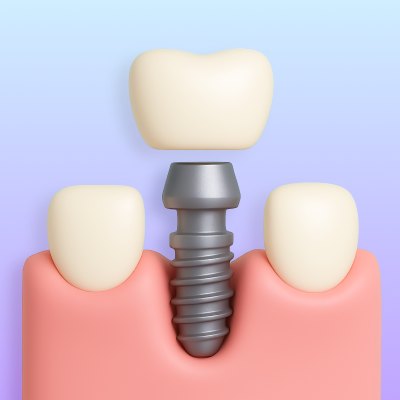






If you have been told there is bone loss around a missing tooth, the natural question is simple: does that mean a dental implant is no longer possible?
Not automatically. Bone loss usually changes the planning conversation. It can affect where an implant could sit, whether the site needs to be rebuilt first, how many phases may be involved, and whether another tooth-replacement option should be compared. It does not give a final yes or no by itself.
That answer needs a dental exam and the right imaging, reviewed by a dentist. If you are comparing care before a trip, start with the implant planning pathway instead of trying to decide from an old X-ray alone. Our implant page explains how hisonrisa reviews dental implant planning in Mexico City for patients who need a clearer next step.
This article is for the traveler or expat who wants to understand what bone loss can change before booking. It is not a diagnosis, and it is not a promise that an implant will or will not be recommended.
Why bone level matters
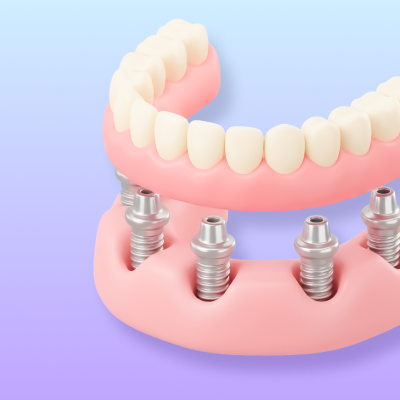
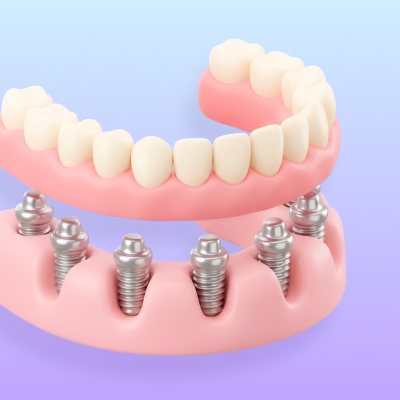
A dental implant is placed in the jawbone. That bone has to support the implant during healing and after the tooth is restored. So the dentist is not only asking, “Is there a gap where a tooth is missing?” The better question is, “Does this site have the support, shape, and surrounding tissue needed for a predictable plan?”
When bone volume has changed, several parts of the plan can change with it.
- Position. The implant has to be planned around the bone that is actually present, not around where the tooth used to be.
- Stability. The dentist needs to judge whether the site can support the implant safely and predictably.
- Sequence. Some cases can move toward implant placement directly. Others may need the site prepared first.
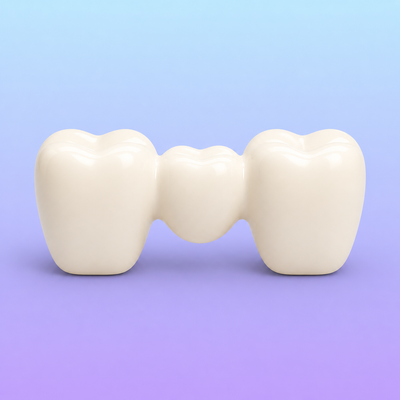
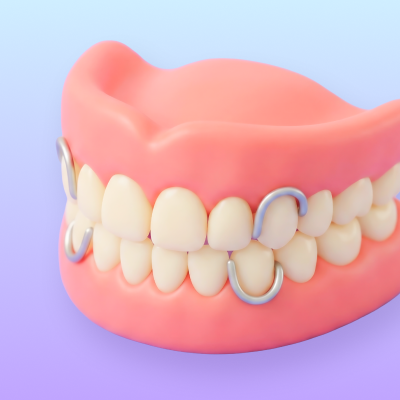
- Alternatives. If an implant is less predictable for that site, a bridge, partial denture, or another plan may be part of the conversation.
The location matters too. Upper back teeth can involve the sinus area, so bone height and anatomy may affect whether the dentist discusses sinus evaluation or site development.
Bone loss also is not only a “how much bone is there?” issue. Gum health, past periodontal disease, plaque control, smoking, diabetes, healing risk, and maintenance all affect implant planning. A scan can show bone shape, but the long-term plan also depends on the tissues and habits around that implant.
What imaging can and cannot tell you
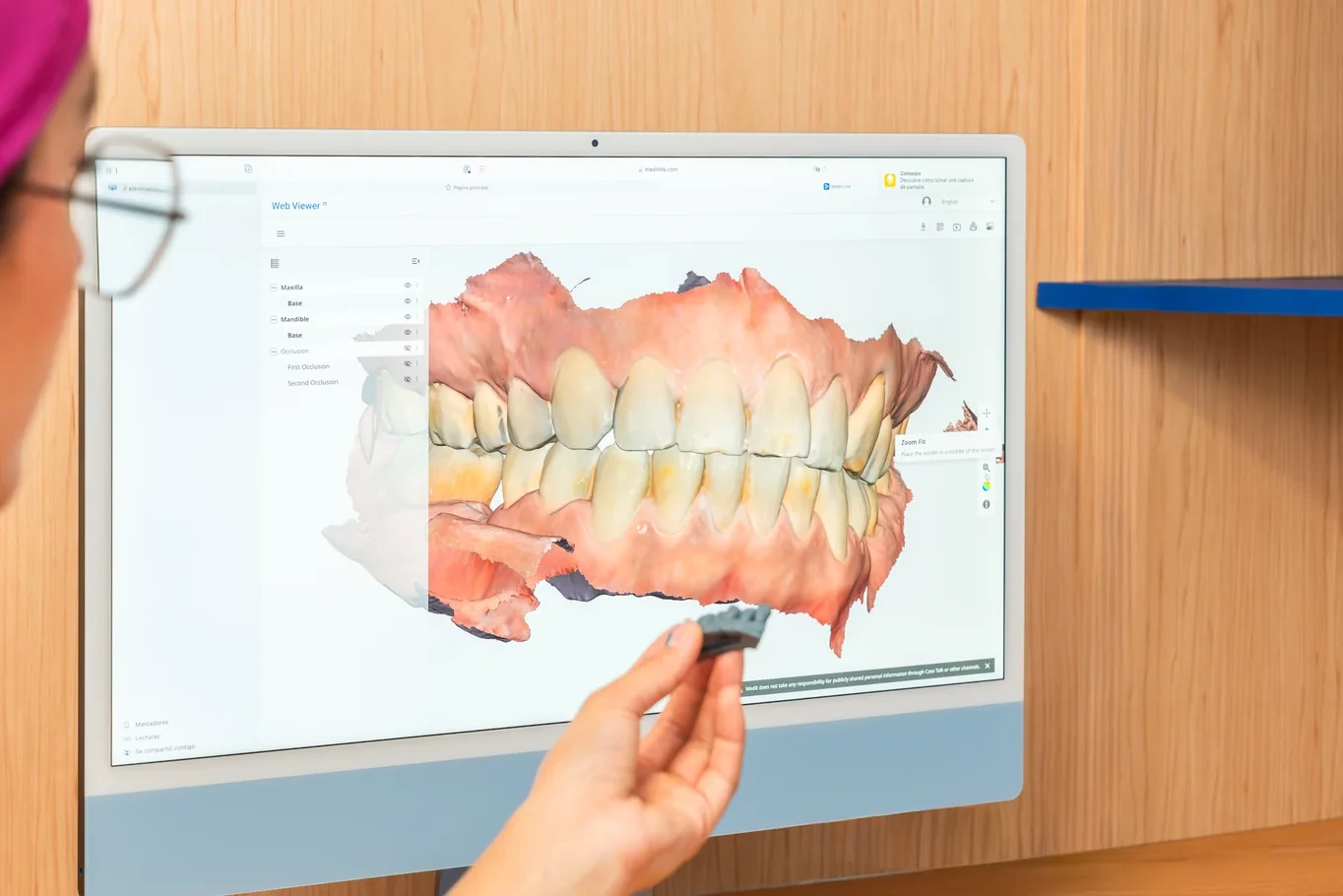
X-rays and 3D imaging can be very useful, but they do not replace the dentist who interprets them.
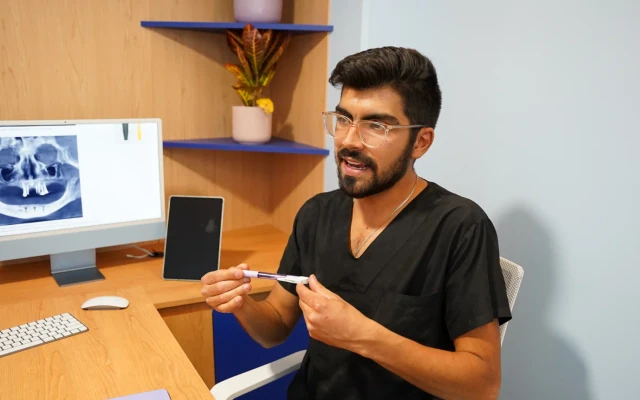
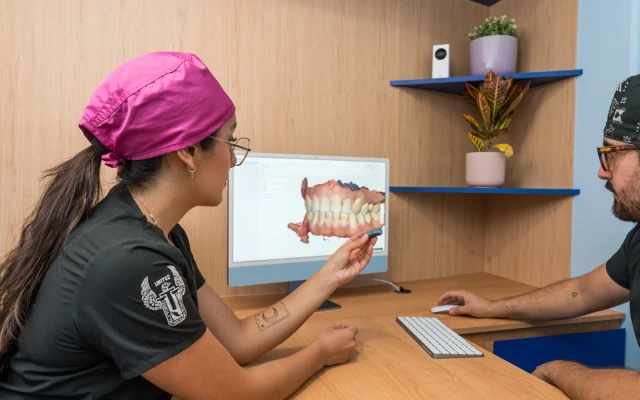
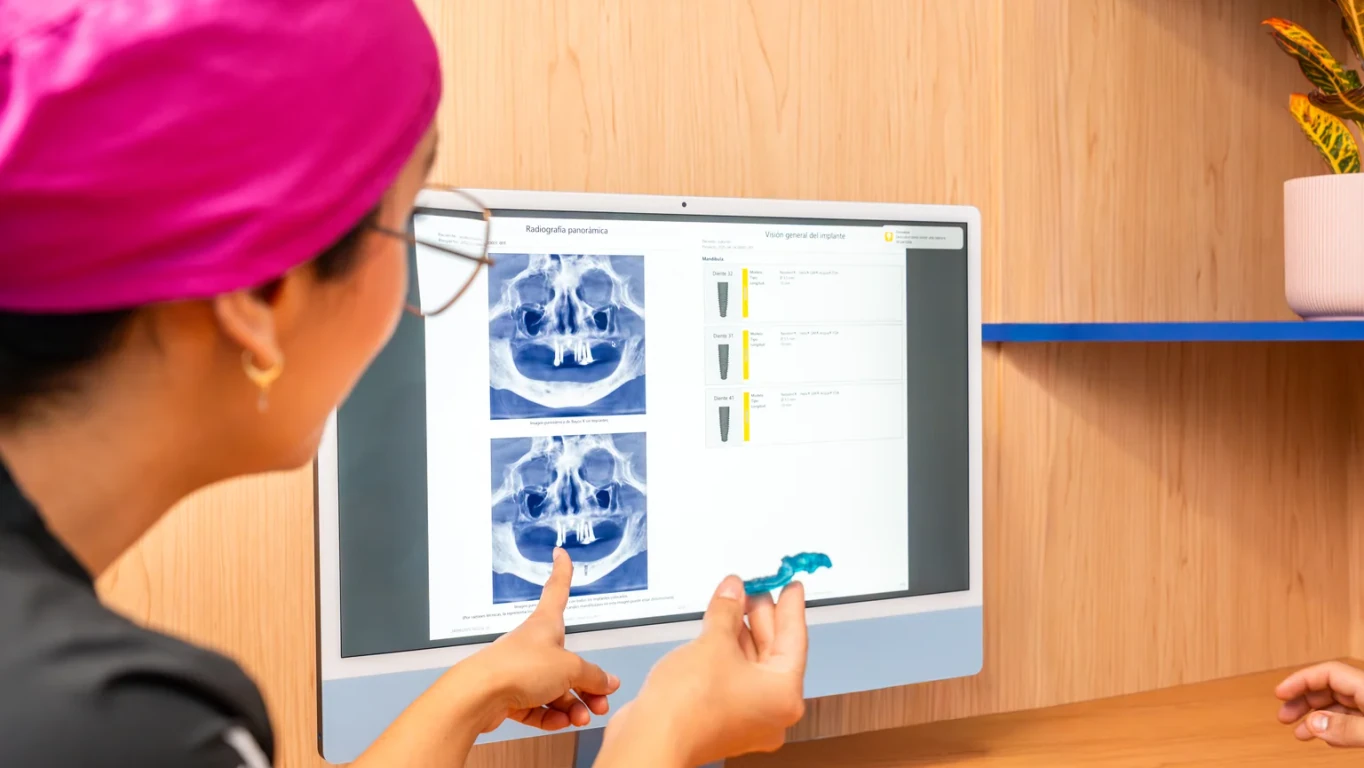
A panoramic X-ray can give a broad view. A periapical X-ray can show a focused area. A CBCT or 3D scan may help the dentist understand bone shape, nearby anatomy, and implant position when that type of imaging is clinically indicated.
What imaging cannot do is turn into a self-diagnosis. A patient cannot look at a scan and safely decide, “I have enough bone,” “I need a graft,” or “I can do this in one trip.” Even a dentist will read imaging together with the exam, gum health, bite, medical history, and the exact goal for the missing tooth.
That distinction matters for travelers. Sending records before you travel can help the clinic understand the likely questions and route the case to the right clinician. It still does not finalize the diagnosis before evaluation.
Common planning paths when bone loss is involved
Bone loss does not create one automatic path. It creates a planning fork.
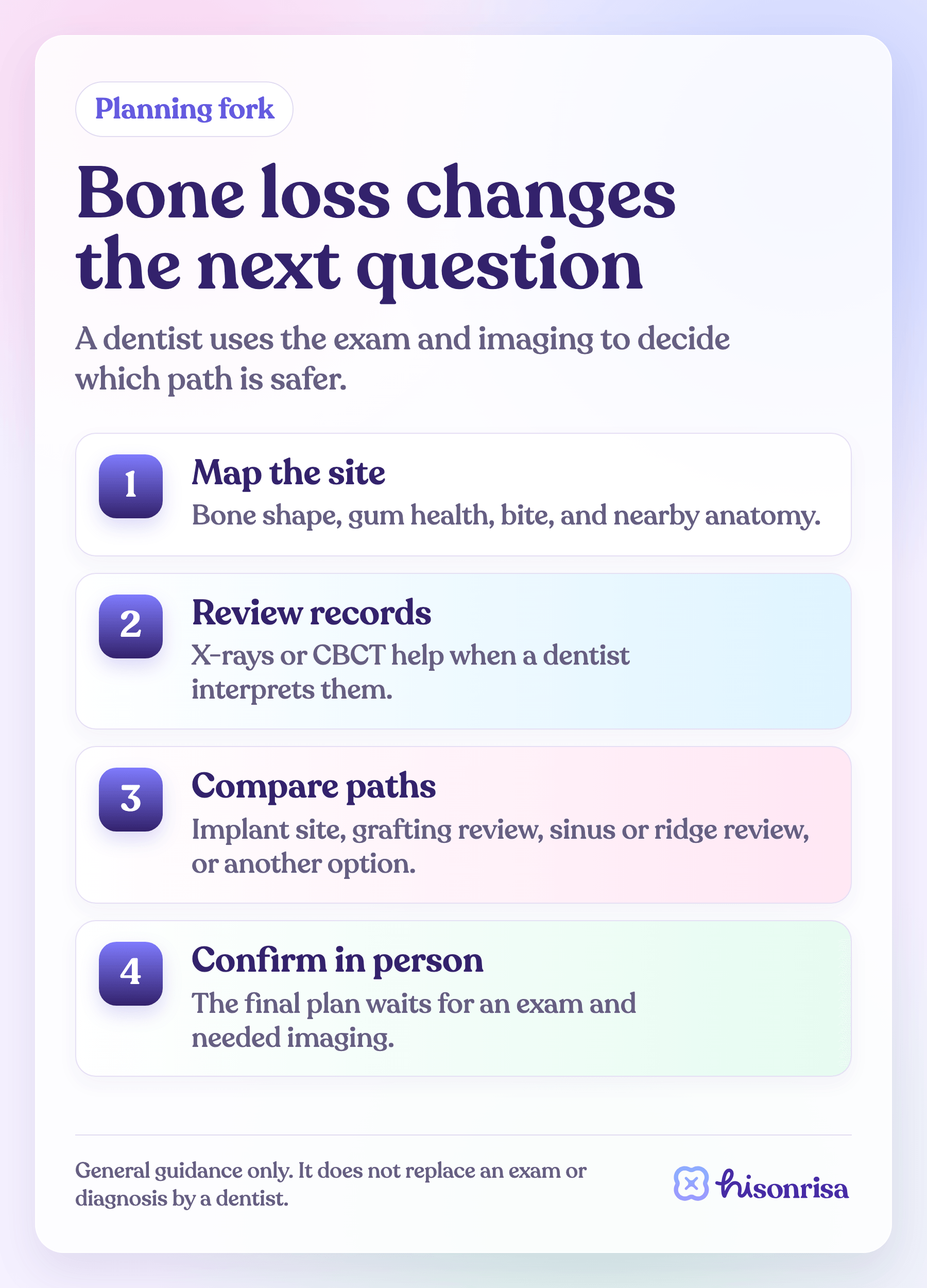
One patient may have enough support to discuss implant placement. Another may need periodontal inflammation controlled first. Another may need the site developed before or with implant placement. A person missing an upper molar may need the sinus area reviewed more carefully. Someone with a demanding bite, limited space, or a long history of gum disease may need a broader comparison before choosing surgery.
The safe way to think about these options is as possibilities.
- Implant planning with the available bone. Sometimes the dentist can plan around the existing bone and focus on position, bite, and restoration.
- Site preparation first. If the foundation is not ready, the dentist may discuss procedures that rebuild or support the area before implant placement.
- Sinus or ridge review. Upper back teeth and deficient ridges can need extra planning because of anatomy and bone shape.
- A different tooth-replacement option. If an implant is not the most predictable choice, the dentist may compare a bridge, partial denture, or another staged plan.
The point is not to memorize procedure names. The useful question is what your dentist needs to review before recommending a path. If you already have records, hisonrisa can help route them for implant records review in Mexico City before you make travel decisions.
What to send before traveling to Mexico City
For an international patient, good records can make the first conversation much more useful. You do not need a perfect file to start. Send what you already have.
Useful records include the following.
- a panoramic X-ray, if available;
- periapical X-rays of the missing-tooth area, if available;
- a CBCT or 3D scan, only if you already have one;
- clear photos of the area and your smile;
- when the tooth was removed or how long it has been missing;
- whether you have had grafting, gum treatment, or prior implant planning;
- any history of gum disease, mobility, deep cleanings, or bleeding gums;
- relevant medical history, medications, allergies, smoking status, or diabetes;
- your travel dates or the window you are considering.
Do not order a CBCT on your own just to “qualify” for an implant. If you already have one, send it. If you do not, the dentist can tell you what imaging is appropriate after reviewing the case.
This information helps the clinic understand whether the likely next conversation is implant planning, graft or sinus evaluation, periodontal stabilization, or a different replacement option. It also helps avoid the common travel mistake of arriving with expectations that should have been clarified before the trip.
One useful detail is what you do not know. If you are unsure when the tooth was removed, whether a graft was placed, or what type of scan you have, say that clearly. Uncertainty is better than guessing, because the dentist can decide what needs to be confirmed.
If an implant is less predictable
Hearing that an implant may be less predictable is disappointing, but it is useful information. It means the planning process is doing its job.
The dentist may explain that the site needs to be prepared first, that gum health needs attention, that the timeline should be staged, or that another option should be compared. None of those possibilities should be treated as a failure. They are ways to avoid forcing a plan that does not match the biology of the site.
For travelers, the best time to learn this is before flights and time off work are locked. A preliminary records review can help you understand what is likely to be discussed, while the final plan still waits for clinical evaluation.
FAQs
Can you still get a dental implant if you have bone loss?
Sometimes, yes. Bone loss does not automatically rule out an implant, but it can change the plan. The dentist needs to review the site, your gum health, imaging, bite, and medical history before saying which path is appropriate.
Does bone loss always mean you need a bone graft?
No. Some implant sites do not need grafting, while others may need site development or a different tooth-replacement option. A graft or sinus-related step may enter the discussion when bone volume or upper-back-tooth anatomy affects implant positioning. The answer depends on the examination and imaging, not on the words “bone loss” alone.
How is bone volume assessed before implant planning?
Existing X-rays or a CBCT may help the dentist assess bone shape, volume, and nearby anatomy when that level of detail is clinically useful. The final plan also considers your gums, bite, medical history, and the goal for the missing tooth. Imaging supports the decision; it does not replace an examination.
When might a bone graft or sinus lift be discussed before an implant?
These options may be discussed when bone volume or the sinus area above an upper back tooth affects safe implant positioning. They are not automatic steps. The dentist reviews the site, imaging, gum health, bite, and treatment goal before recommending a sequence.
What if the bone loss came from gum disease?
Then gum health becomes part of the implant plan. The dentist needs to know whether periodontal disease is active, controlled, or likely to affect healing and maintenance around an implant.
What should I send before traveling for an implant consultation?
Send any X-rays or CBCT you already have, photos, missing-tooth history, prior treatment plans, gum-health history, relevant medical details, and your travel window. Send what exists now instead of waiting for a perfect set of records.
What if an implant is less predictable in my case?
The dentist may discuss preparing the site first, staging treatment, or comparing another replacement option. The goal is not to force an implant. The goal is to choose a plan that fits the site, the bite, your health, and your travel reality.
If you want a clearer next step before arranging travel, send your available records through our dental implants in Mexico City page.
Educational note: this article is general dental information. It does not replace a dental evaluation, diagnosis, or X-rays/CBCT review by a dentist.