






If you are looking into old dental crown replacement in Mexico City because your crown feels loose, fell off, hurts when you bite, smells bad, tastes strange, or has a dark edge near the gumline, do not treat it like a simple cosmetic problem. The first question is not “Which crown should I buy?” It is whether the tooth underneath can still support the crown you have, a new crown, or a different plan.
The short answer: an old crown can often be replaced, and a crown that fell off can sometimes be recemented. But the tooth underneath has to be examined first. Fit, bite, remaining tooth structure, gum health, decay, fracture risk, infection signs, and root canal history can all change the recommendation.
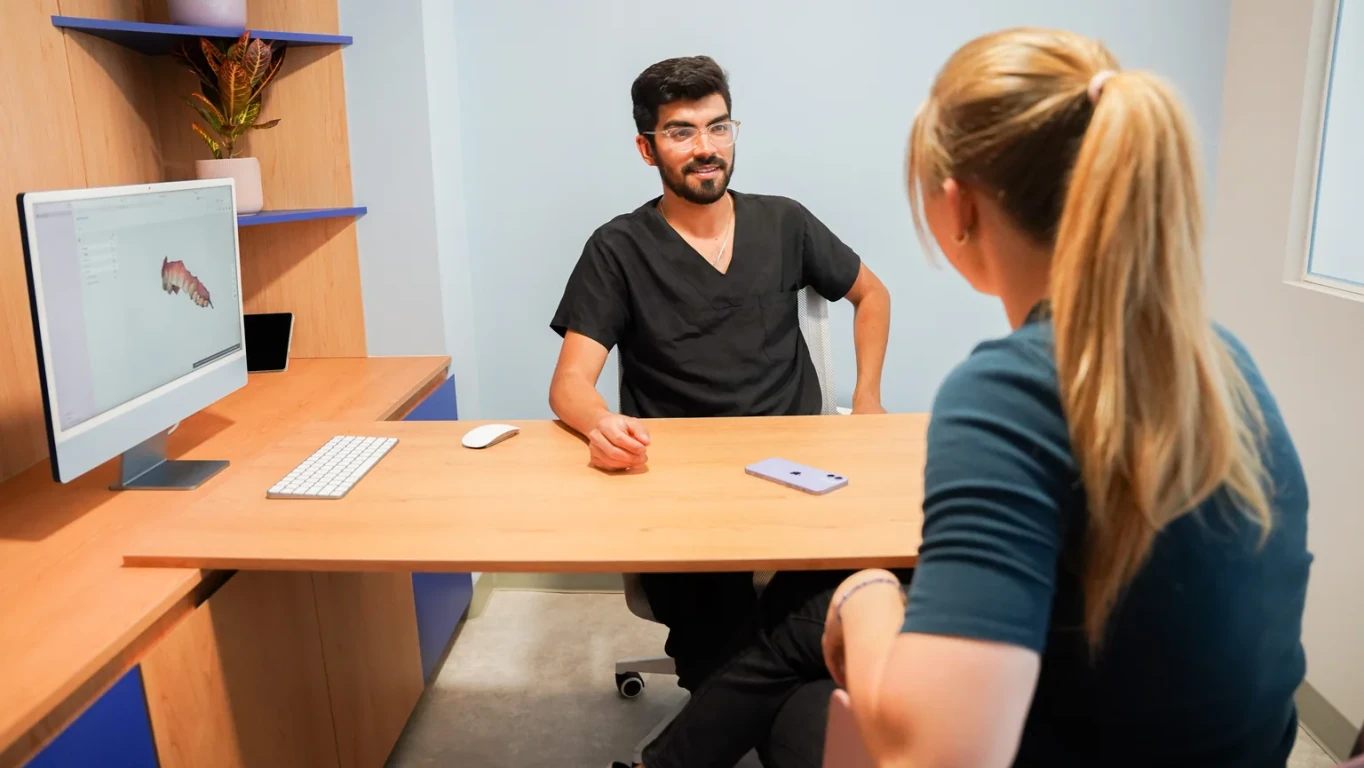
If you are in Mexico City, start with a dental crown evaluation and replacement in Mexico City. If the crown fell off, the tooth hurts, your gum or face is swollen, you notice pus or fever, or the crown is loose enough to swallow, ask about an urgent dental evaluation for a lost or painful crown.
Signs an old crown in Mexico City needs attention
Age can be useful background, but age alone does not decide whether a crown needs replacement. What matters is whether the fit, bite, cement, tooth, or surrounding gum has changed.
Watch for changes you can feel or see:
- The crown moves, clicks, rocks, or feels loose.
- The crown came off completely.
- The tooth hurts when biting or feels sensitive to cold, heat, or pressure.
- The edge near the gum looks dark, newly exposed, or different from before.
- Food gets trapped around the crown.
- There is bleeding, swelling, gum irritation, bad taste, or bad smell.
- Your bite suddenly feels high, uneven, or off.
None of those signs is a diagnosis by itself. A dark margin does not automatically mean decay, and a bad taste does not automatically mean infection. Still, these are good reasons to have the crown and tooth checked before a small fit problem becomes a bigger restoration problem.
What to do if you have a loose dental crown or your old crown fell off
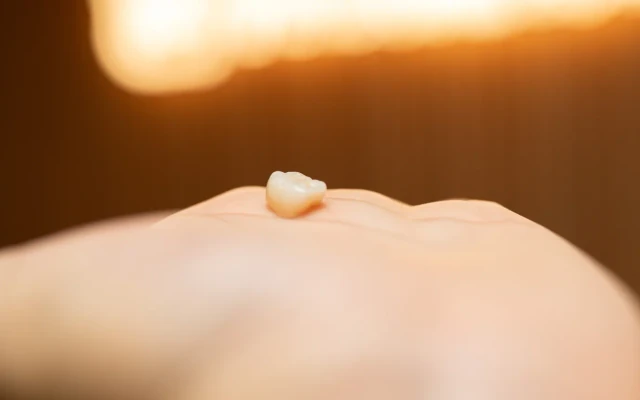
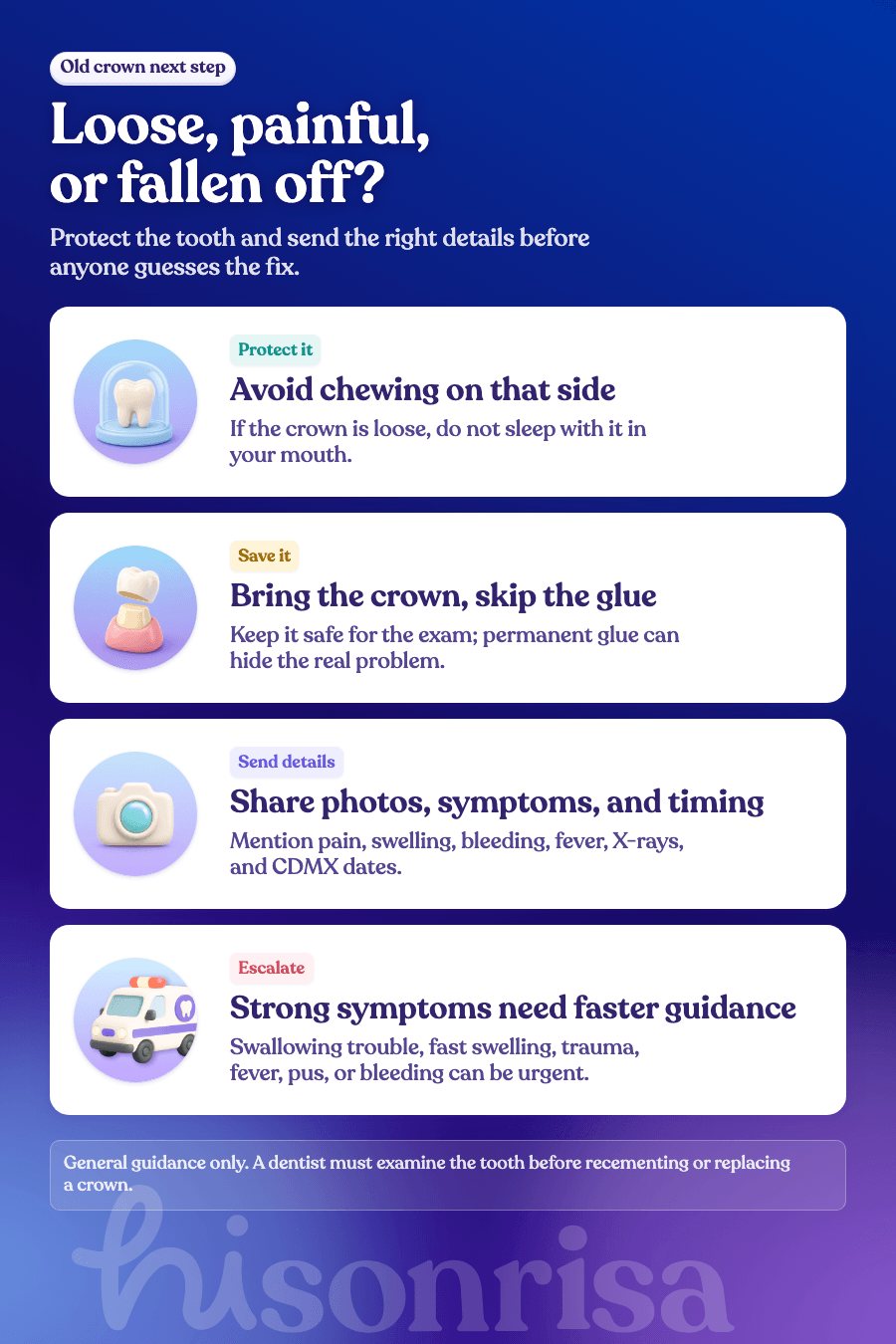
If the crown is loose, avoid chewing hard or sticky food on that side. If it feels like it could come off in your mouth, do not sleep with it loose. If the crown has already fallen off, keep it in a small bag or container and bring it to the appointment if possible.
Do not use permanent glue. A crown can look like it fits and still have decay, fracture, bite changes, cement failure, or an open margin underneath. Sealing it incorrectly can make evaluation harder and may hide the real problem.
Before the appointment, send clear photos if the clinic asks for them. The most useful details are simple: whether the crown is loose or fully off, when symptoms started, whether you have pain or sensitivity, whether the gum is swollen or bleeding, whether there is fever, pus, bad taste, bad smell, or bite change, and whether you have recent X-rays. If you are traveling, include your dates in Mexico City so timing can be discussed realistically.
If the crown that came off was temporary, not an old permanent crown, the next steps may be different. Use the separate guide for a temporary crown that fell off while traveling in Mexico City.
What the dentist checks before recementing or replacing it
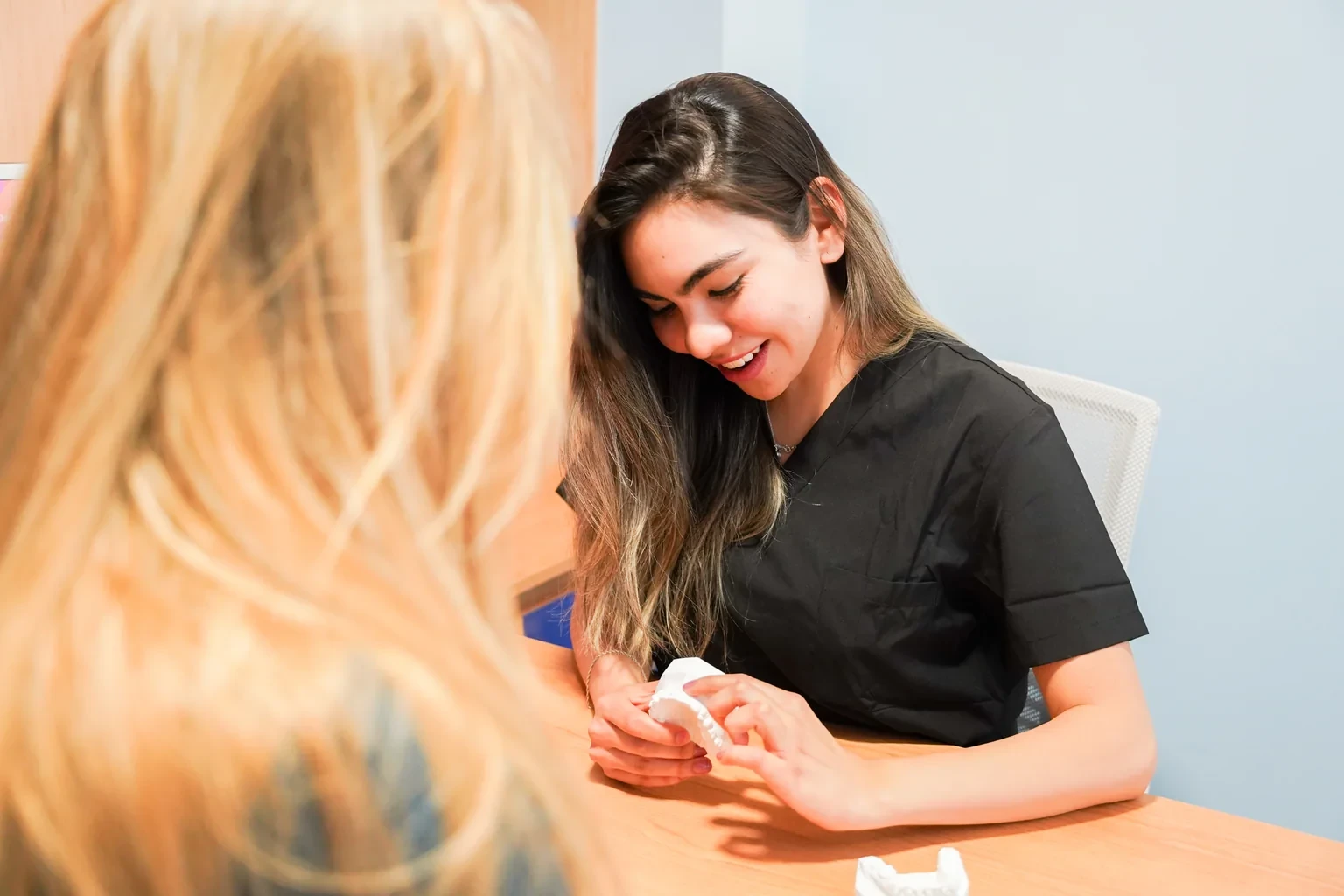
An old-crown visit is not only about putting something back on. The dentist has to understand whether the tooth is still protected and whether the next restoration would be stable.
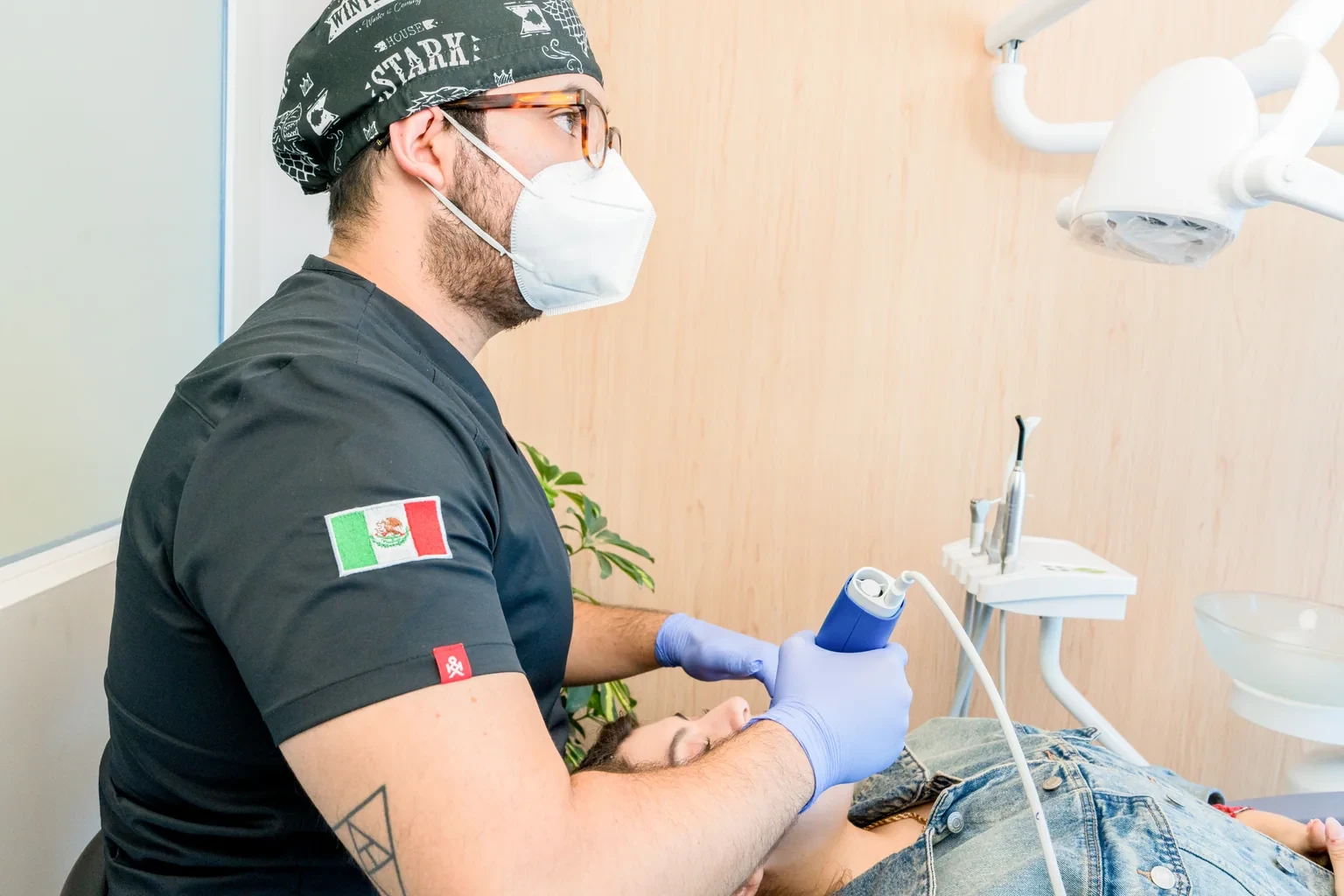
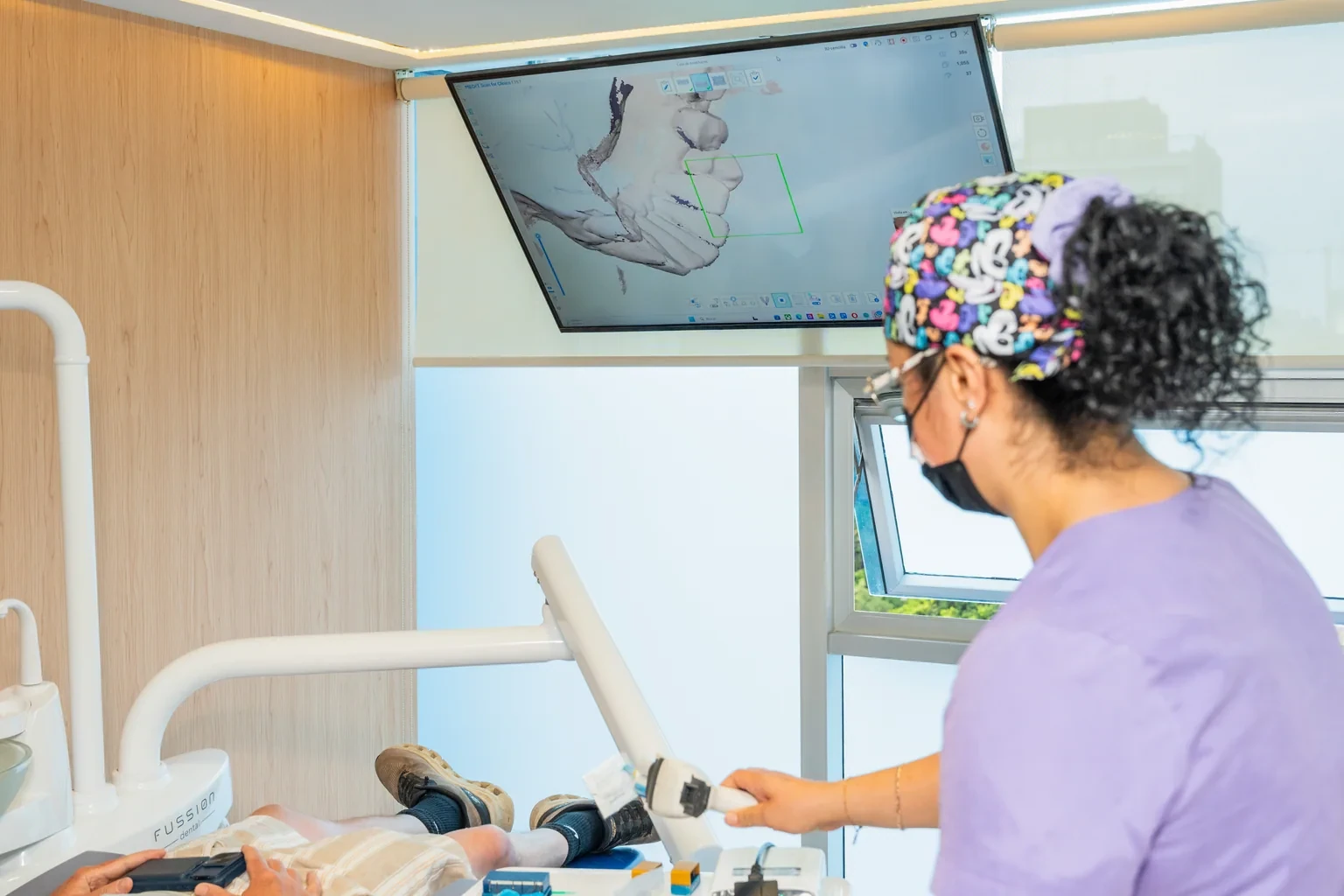
That evaluation may include the crown margins, the inside fit of the crown, the bite, the gum tissue, the remaining tooth structure, and whether the crown can seat fully. X-rays or other imaging may be needed to look for decay, fracture, bone changes, root canal history, or problems that are not visible from the outside.
Photos can help the team understand what happened before you arrive, but photos cannot answer the whole question. They may show that the crown is missing or that the gum looks irritated. They cannot reliably show whether the tooth is restorable, whether the crown still fits internally, or whether recementation is safe.
Possible paths after evaluation
After the exam, the path depends on what is actually found.
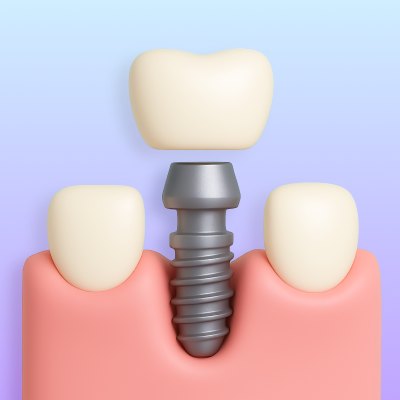
If the crown and tooth still fit well, and there is no new decay, fracture, leakage, bite problem, or other concern, recementation may be possible. If the old crown no longer fits, is cracked, has open margins, or cannot protect the tooth predictably, a new crown may be recommended instead.
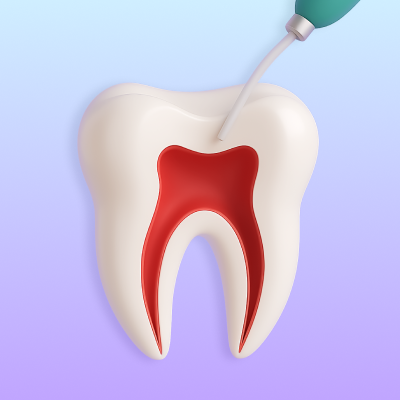
Sometimes the tooth needs a buildup or post before a new crown can be made. If there are nerve symptoms, a prior root canal, or signs that root canal status affects the plan, the dentist may discuss root canal and crown planning.
In more complex cases, the tooth may not be restorable, and a different plan such as extraction and replacement options may need to be discussed.
Some patients ask whether an old crown can be handled quickly while they are in CDMX. Selected timing options may exist after an in-person exam and lab coordination, but same-day replacement should not be assumed. First, review how long a dental crown can take in Mexico City for the full sequence. If timing becomes part of the plan, ask about selected same-day crown options after an in-person exam.
Cost and timing planning in Mexico City
The cost of an old crown problem depends on what the tooth needs. Recementing an existing crown is different from replacing a crown, and both are different from a plan that also needs imaging, buildup, root canal treatment, retreatment, emergency evaluation, or work on another tooth.
That is why this article should not guess a price from symptoms. For planning, use the dedicated page on dental crown cost in Mexico City, then expect the final quote to depend on the evaluation.
Travel timing matters, too. If you have a flight, a short stay, or a narrow window in Mexico City, say so early so appointment planning and lab steps can be discussed realistically.
When a crown problem should be checked urgently
A lost or loose crown is worth checking soon, especially if the tooth is exposed or the bite feels different. It becomes more urgent with strong pain, swelling, fever, pus, bleeding that does not settle, trauma, sharp edges, a major bite change, or a loose crown that could be swallowed.
For severe symptoms such as trouble breathing or swallowing, spreading swelling in the face or neck, swelling near the eye, major trauma, or uncontrolled bleeding, seek emergency medical help instead of treating it as a routine crown appointment.
For dental urgency during regular clinic planning, hisonrisa can help you understand whether your situation should start with crown evaluation or an urgent dental evaluation in Mexico City.
FAQ
Can an old dental crown be replaced?
Yes, an old dental crown can often be replaced, but the tooth underneath has to be checked first. The dentist needs to see whether the remaining tooth, bite, gum, and root status can support a new crown.
Can a fallen crown be recemented?
Sometimes. A fallen crown may be recemented if the crown and tooth still fit well and there is no new decay, fracture, leakage, bite problem, or other reason to replace it. Do not assume recementation will work until the tooth and crown are examined.
Is it a big deal if my crown falls off?
It can be. A fallen crown may leave the tooth sensitive, weaker, or more exposed. Keep the crown, avoid chewing on that side, and arrange an evaluation. If there is strong pain, swelling, fever, pus, trauma, or a sharp edge, ask for urgent guidance.
How do I know if something may be wrong under a crown?
Warning signs can include pain, sensitivity, bad taste or smell, gum swelling, bleeding, a dark margin, food trapping, or a bite that suddenly feels different. These signs do not diagnose the problem, but they are reasons to have the crown checked.
Why does my old crown hurt?
An old crown can hurt for several reasons, including bite pressure, leakage, decay under the crown, gum inflammation, cracks, nerve irritation, or root canal problems. A dentist needs to check the tooth, bite, and X-rays when needed to understand the cause.
How long do dental crowns last?
Many crowns last for years, but there is no fixed expiration date. Longevity depends on the material, fit, bite forces, oral hygiene, gum health, decay risk, and whether the tooth underneath changes over time.
What happens during an old-crown evaluation in Mexico City?
The dentist may review your symptoms, photos, crown history, bite, gums, crown fit, remaining tooth structure, and X-rays if needed. The goal is to decide whether recementation, replacement, buildup, root canal planning, or another treatment path is appropriate.
How many times can a dental crown be replaced?
There is no useful fixed number. It depends on how much healthy tooth remains, how the bite works, whether there is decay or fracture, and whether the tooth can still support a crown.
Could I need a buildup, root canal, or a different treatment before a new crown?
Yes, that is possible in some cases. If the tooth has lost structure, has nerve symptoms, has prior root canal concerns, or is not restorable in its current condition, the plan may involve more than simply making a new crown.
What should I send before my appointment in Mexico City?
Send a clear photo, say whether the crown is loose or fully off, explain when symptoms started, mention pain, sensitivity, swelling, bleeding, fever, bad taste, bad smell, or bite changes, and share recent X-rays if you have them. Include allergies, medications, relevant medical history, and travel dates if timing matters.
If you want an old crown checked in Roma Sur, you can start with hisonrisa’s dental crown evaluation and replacement in Mexico City. This article is general dental information and does not replace dental evaluation, diagnosis, or needed imaging/review by a dentist.