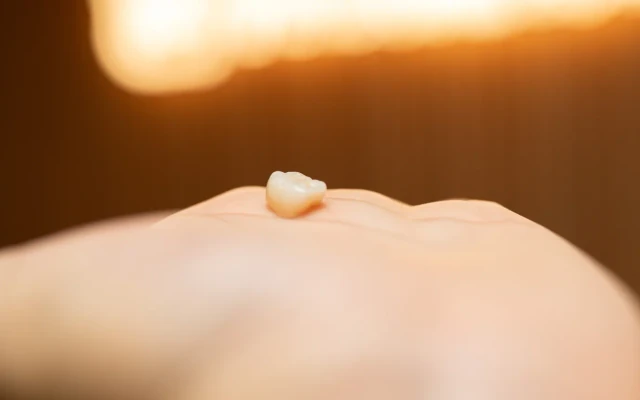








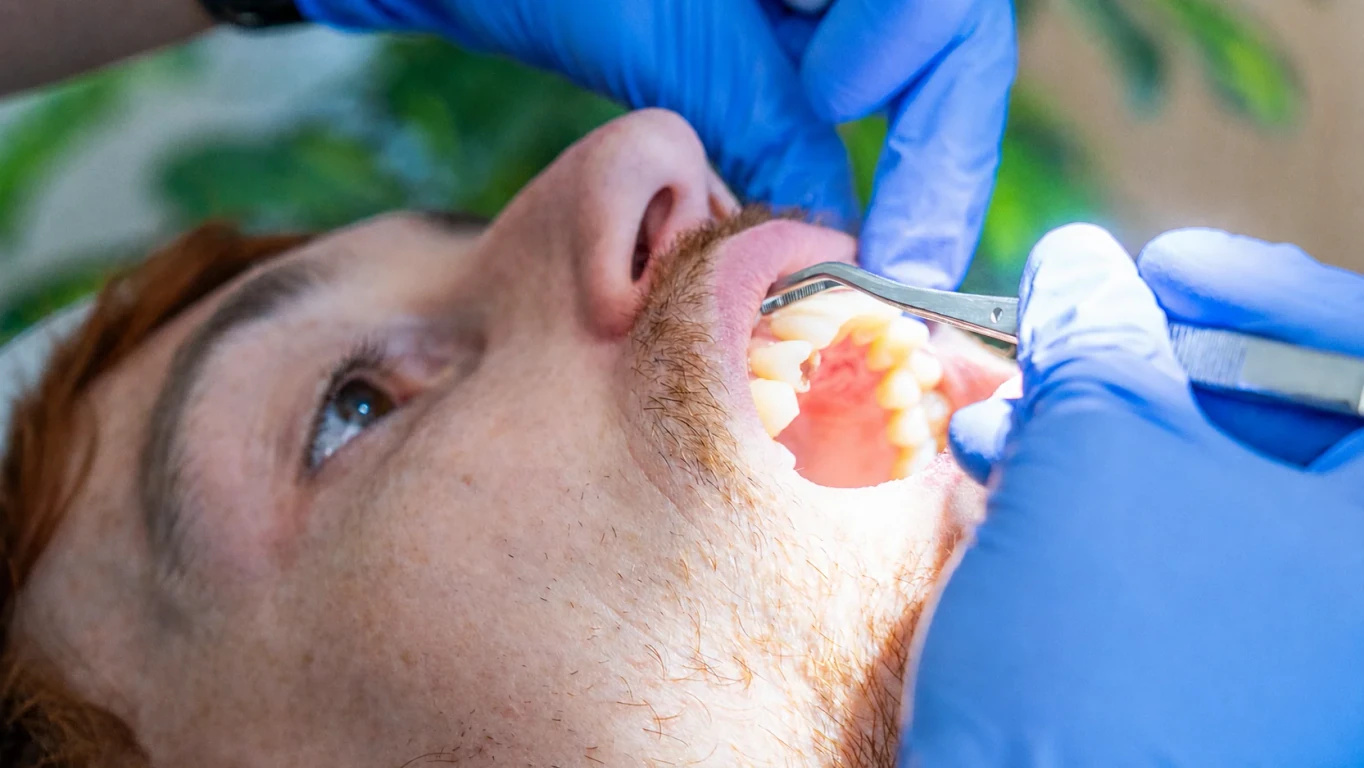
If you are searching for broken tooth crown Mexico City because part of a tooth just chipped, cracked, or broke, the honest answer is simple: a crown may be one possible fix, but it is not something you can confirm from symptoms or photos alone. A dentist needs to check how much tooth is left, how the tooth bites, where the break sits, whether a crack reaches the gumline, and whether the nerve may be involved.
If the tooth is painful, sharp, loose, bleeding, swollen, or you are leaving Mexico City soon, start with an urgent dental evaluation for a broken or cracked tooth in Mexico City. The first decision is not “crown or no crown.” It is whether the tooth is stable enough to wait or needs attention quickly.
When a broken tooth should be checked urgently
Some broken teeth look dramatic but turn out to be a sharp edge or a smaller chip. Others look less serious and involve a deeper crack, a failed old filling, or irritation close to the nerve. That is why a broken tooth should be sorted by urgency first and treatment type second.
Seek urgent dental evaluation if you notice facial or gum swelling, fever, pus, uncontrolled bleeding, severe pain, pain after trauma, tooth mobility, or a broken edge that is cutting your tongue or cheek. If you have trouble breathing or swallowing, or swelling is spreading quickly into the face, eye, jaw, or neck, seek emergency medical care first. You should also move quickly if you are close to a flight and the tooth hurts when you bite or feels unstable. Travel timing does not prove the tooth is dangerous, but it can make guessing more stressful and less useful.
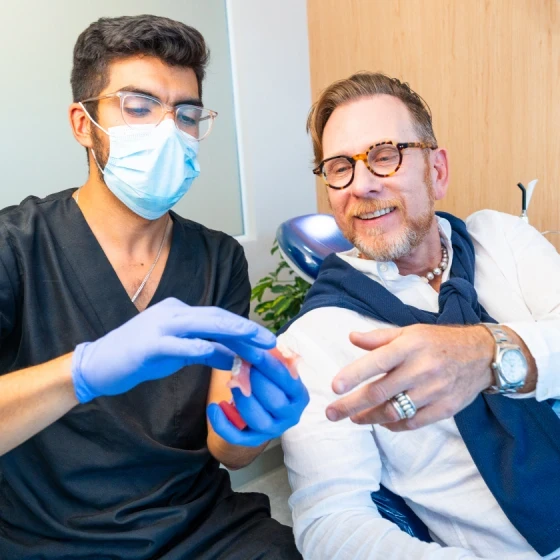
At hisonrisa in Roma Sur, the goal of an emergency visit is to look at what happened, check the tooth, and explain the next reasonable step in plain language. That could be a temporary measure, a filling, a larger restoration, root canal evaluation, extraction planning, or a staged plan depending on what the dentist finds.
What to do before the appointment
Keep the plan simple until a dentist sees the tooth. Avoid chewing on the broken side. If a piece of tooth or filling came out, save it if you still have it. If there is a sharp edge, try not to keep rubbing it with your tongue or cheek, and contact a dentist instead of trying to file or reshape the tooth yourself.
Take clear photos if you can, but use them as triage support, not as a diagnosis. A photo can show a broken cusp, a missing filling, or a sharp edge. It cannot reliably show whether a crack runs below the gumline, whether the nerve is involved, or whether enough healthy tooth remains for a filling, onlay, or crown.
If you are messaging the clinic, include when the tooth broke, whether it hurts when you bite, whether cold or heat triggers pain, whether there is swelling, bleeding, pus, or fever, which tooth is involved if you know, whether you saved a broken piece, any recent X-rays, relevant medical history, allergies, and your travel dates. Those details help the team understand urgency before you arrive.
Why a crown is not the first assumption
A crown can be useful when a tooth has lost too much structure for a normal filling to hold reliably. It covers and protects what remains, which can matter when a large old filling breaks, a molar cusp fractures, or the tooth needs stronger coverage after other treatment.
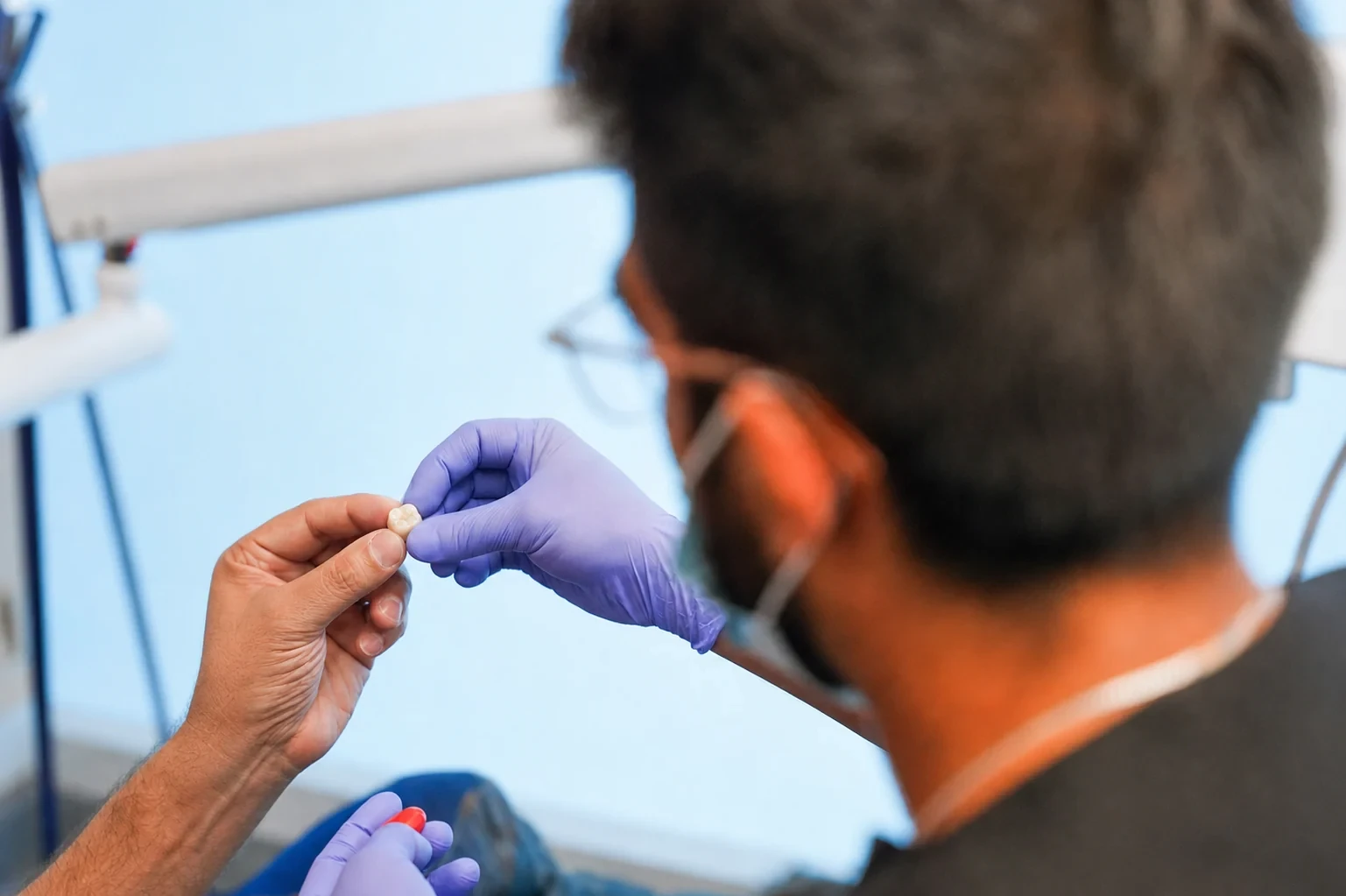
But a broken tooth does not automatically mean a crown. A small chip may be smoothed or bonded. A limited break may be restored with a filling. A larger break may need an inlay or onlay. A deeper crack, decay, or nerve involvement may require root canal treatment before a crown can be considered. In some cases, the tooth may not be restorable and extraction may be discussed.
The point is not to minimize the problem. It is to avoid locking onto the wrong treatment too early. If you want a deeper comparison after evaluation, this page explains how dentists compare filling, onlay, and crown options after evaluation.
What the dentist needs to check
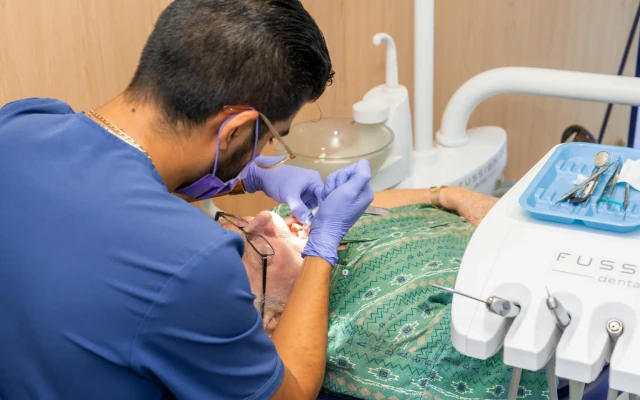
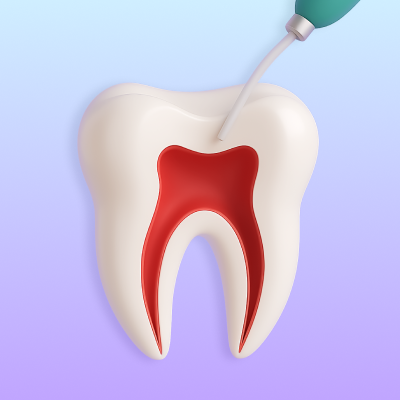
During evaluation, the dentist is looking at more than the visible broken area. They may check how much tooth is left, whether decay is present, how the tooth responds when you bite, whether the gum margin is involved, whether the fracture may extend below the gumline, and whether there are signs the nerve has been affected. Imaging may be needed when the visible tooth does not explain the symptoms.
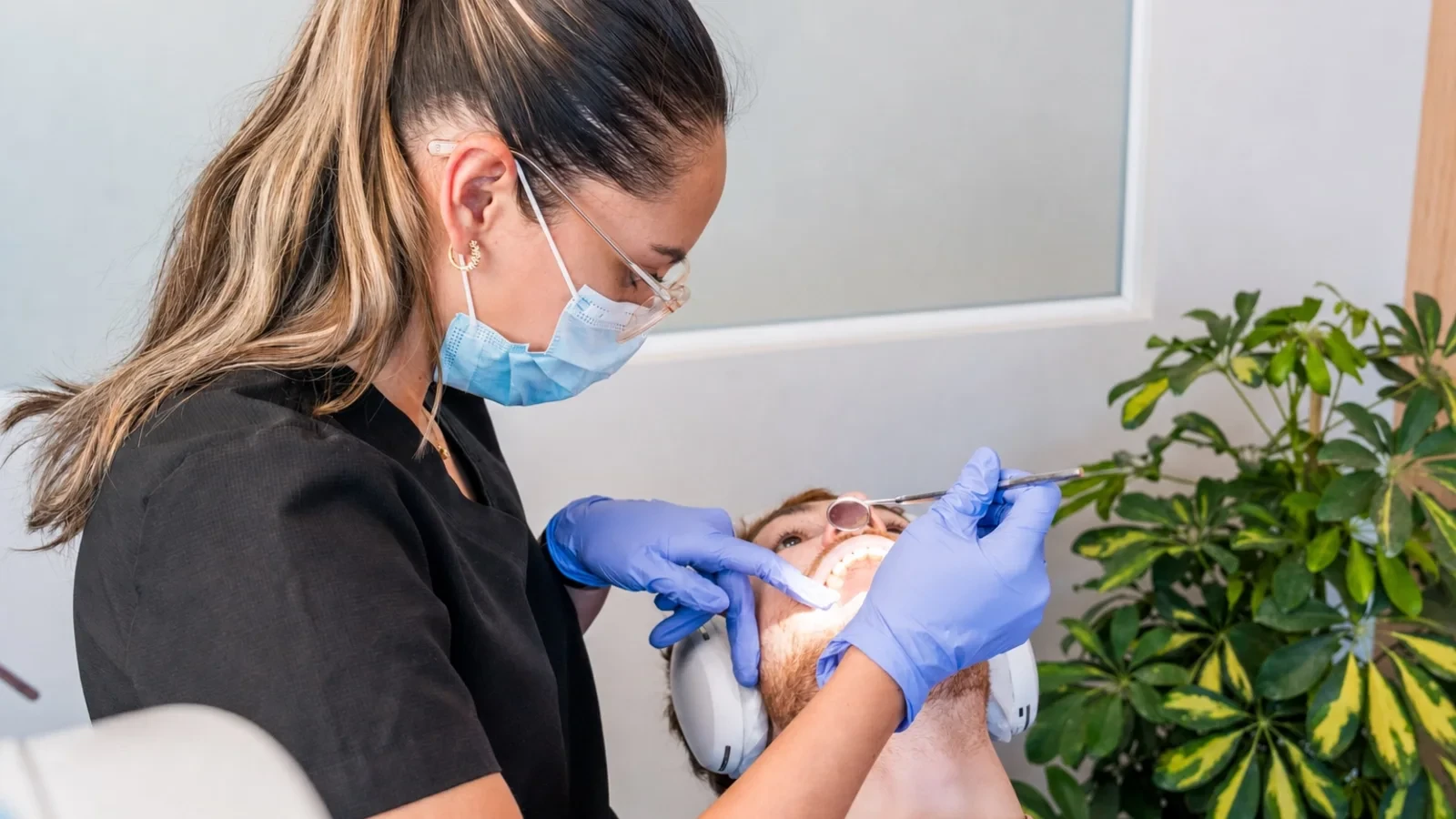
This is also where travel timing becomes part of the plan. A dentist can explain what looks urgent, what can be stabilized, and what should be planned more carefully. That does not mean every case can be finished before a flight. It means you get a clearer plan instead of guessing from pain, photos, or online examples.
hisonrisa is located at Tepic 139-706 in Roma Sur, Cuauhtemoc, CDMX. English and Spanish support can help if you are visiting Mexico City and need the explanation to be clear before you decide what to do next.
Possible treatment paths after a broken tooth
The final recommendation depends on the exam, but the common paths are straightforward.
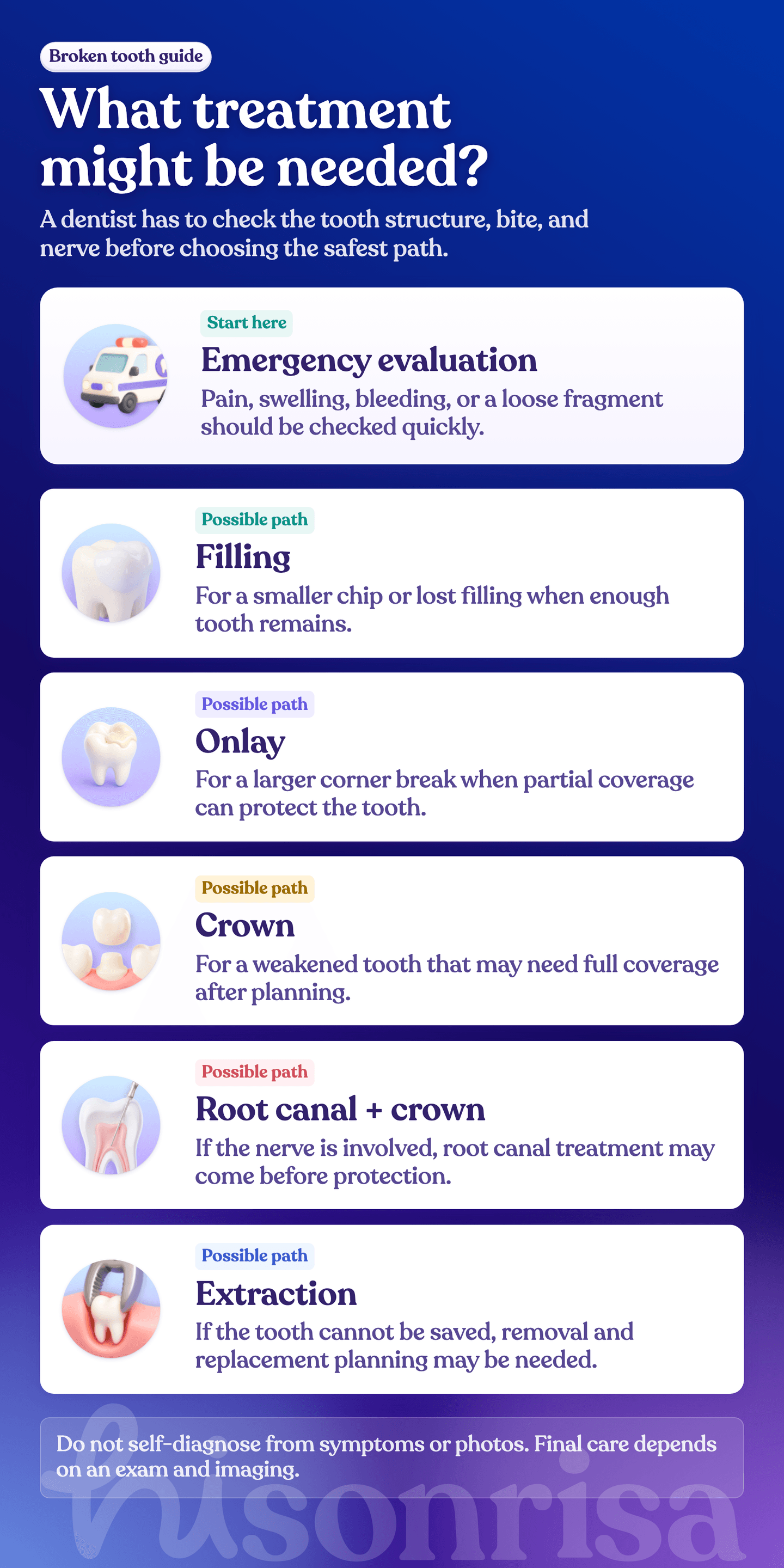
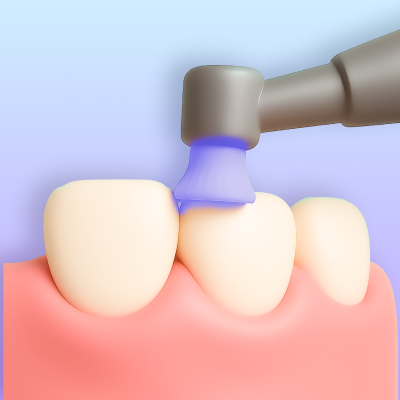
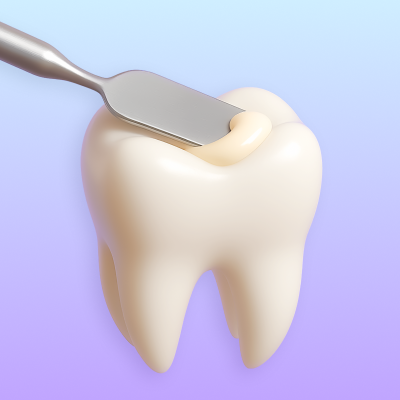
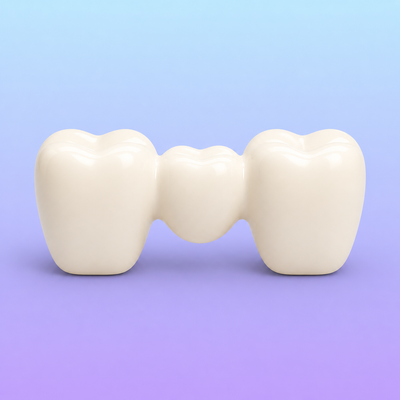
A small chip or limited broken edge may be handled with smoothing, bonding, or a direct filling when the tooth still has enough support. A larger broken area may need an inlay or onlay, which can be a middle option when a filling is not enough but a full crown may not be necessary.
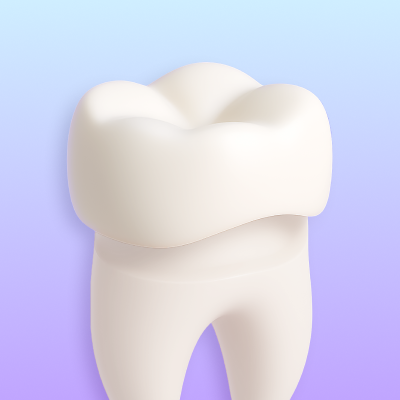
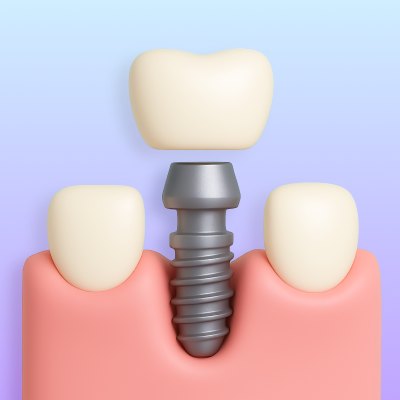
A crown may be considered when the tooth needs broader coverage and protection. This is more common when a large filling failed, a cusp broke, or the remaining tooth structure is weak. If you need planning context after evaluation, the dental crowns page explains crown treatment more broadly.
If the nerve is involved or the tooth has deeper infection signs, the plan may shift toward root canal treatment followed by a crown. That is a different planning lane, so detailed questions belong on the root canal and crown planning page.
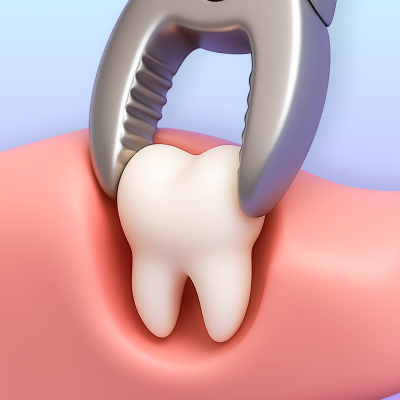
If the tooth cannot be restored predictably, extraction or another plan may be discussed. That can be hard to hear, but the dentist should explain why the tooth is or is not restorable before you make a decision.
What about cost and same-day timing
Cost depends on what the tooth actually needs. A filling, onlay, crown, core buildup, root canal, imaging, emergency evaluation, and extraction are different types of care. The final quote should come after the exam and treatment plan, not from a photo alone.
For planning, use the crown cost page after a dentist has confirmed that a crown is really part of the plan. Do not use crown pricing to decide whether your broken tooth needs a crown, because the treatment category still has to be diagnosed first.
Same-day crown timing also depends on the case. Some selected crown cases may be coordinated through an external lab after an exam, but timing depends on the tooth, lab coordination, and appointment availability. Do not assume completion before a flight. If timing becomes relevant after evaluation, the selected-case same-day crown page explains that planning lane.
What to send hisonrisa before you come in
The most useful message is specific and calm. Send a clear photo of the broken area if you can. Say when it happened, whether it was from biting, trauma, a previous filling, or something else, and whether the tooth hurts only when chewing or also at rest.
Mention swelling, fever, bleeding, pus, tooth movement, or strong pain clearly. If you have trouble breathing or swallowing, seek emergency medical care first rather than waiting for a dental reply. Include your travel dates if you are visiting Mexico City, especially if you are leaving soon. If you have recent X-rays or records, send those too.
This helps the team understand whether you need urgent triage and what kind of appointment context may be needed. It still does not replace the exam, but it makes the first conversation more useful.
Frequently asked questions
Do I need urgent dental care for a broken tooth in Mexico City?
You should seek urgent dental evaluation if the tooth is painful, sharp, unstable, bleeding, swollen, or connected to trauma, fever, or pus. If you have trouble breathing or swallowing, seek emergency medical care first. If symptoms are mild, you may still need an exam soon, especially if you are traveling and do not know how deep the damage is.
Can a broken molar be fixed with a filling instead of a crown?
Sometimes, yes. A filling may be enough when the break is limited and enough strong tooth remains. Larger breaks may need an onlay or crown, and deeper damage can change the plan. The exam decides.
What if the broken tooth hurts only when I bite?
Pain on biting can happen with cracks, damaged fillings, bite trauma, or other issues. It is a reason to avoid chewing on that side and get the tooth checked, because symptoms alone cannot show how deep the problem is.
What if there is a sharp edge cutting my tongue or cheek?
A sharp edge is a practical reason to contact a dentist promptly. It may be a small broken edge, or it may be part of a larger fracture. Try not to keep irritating the area, and ask for evaluation instead of trying to file or adjust the tooth yourself.
Can photos tell whether I need a crown or root canal?
No. Photos can help show the visible break, but they cannot reliably show the crack depth, the nerve condition, the root, or whether the tooth is restorable. A dentist may need an exam and imaging before recommending a crown, root canal plus crown, extraction, or another option.
What should I send the clinic before an urgent visit?
Send clear photos, when the tooth broke, what triggered it, your symptoms, any swelling or fever, whether biting hurts, recent X-rays if available, relevant medical history or allergies, and your travel dates. Those details help with triage before you arrive.
Can a broken tooth wait until after my flight?
Sometimes a minor chip can wait briefly, but pain, swelling, fever, bleeding, mobility, trauma, or a sharp unstable edge should be evaluated before you travel if possible. If you are unsure, book an emergency dental check for swelling, sharp edges, or biting pain before making the call yourself.
If you broke a tooth while visiting Mexico City, the safest next step is to get the tooth evaluated before assuming it needs a crown. Send photos, symptoms, and travel timing so the team can help you decide whether the situation needs urgent attention.
Educational note. This article is general dental information. It does not replace dental evaluation, diagnosis, imaging, or review by a dentist.