
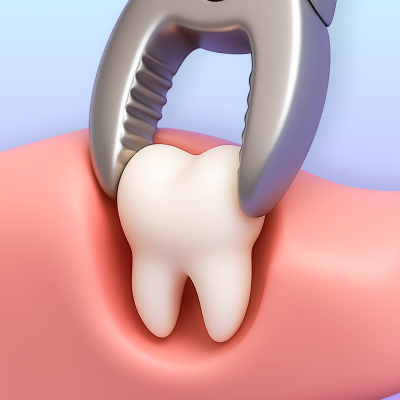






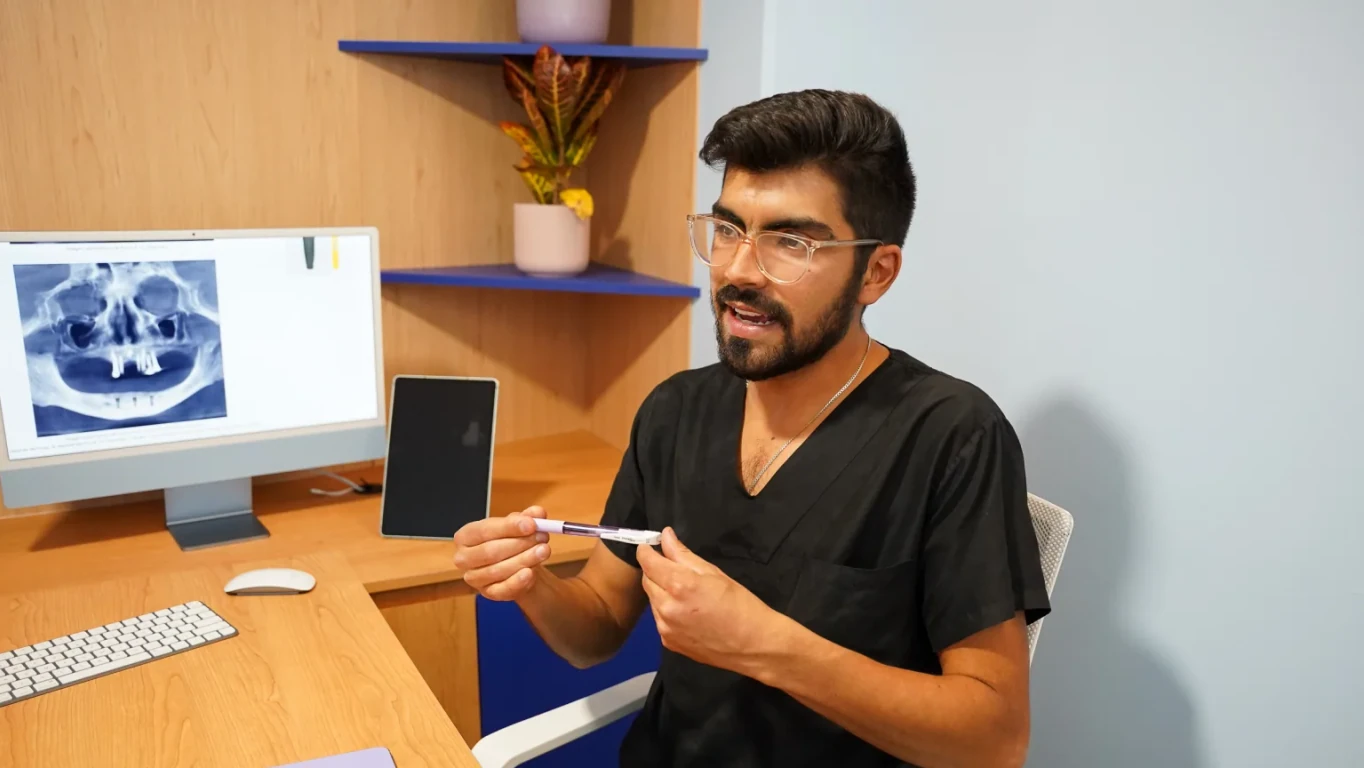
Yes, sometimes. A dentist may place an implant during the same procedure as the extraction when the exam, imaging, and surgical findings support it. The plan can still change after the tooth comes out and the socket is visible. Placing the implant that day also does not mean a temporary tooth, immediate loading, or the final crown will be ready.
Patients often ask us about this at our Roma Sur office because they want to know how many stages treatment may involve. The answer starts with the condition of one specific site, not the calendar. For the broader treatment overview, see single-tooth dental implant planning in Mexico City.
What “same day” means in implant treatment
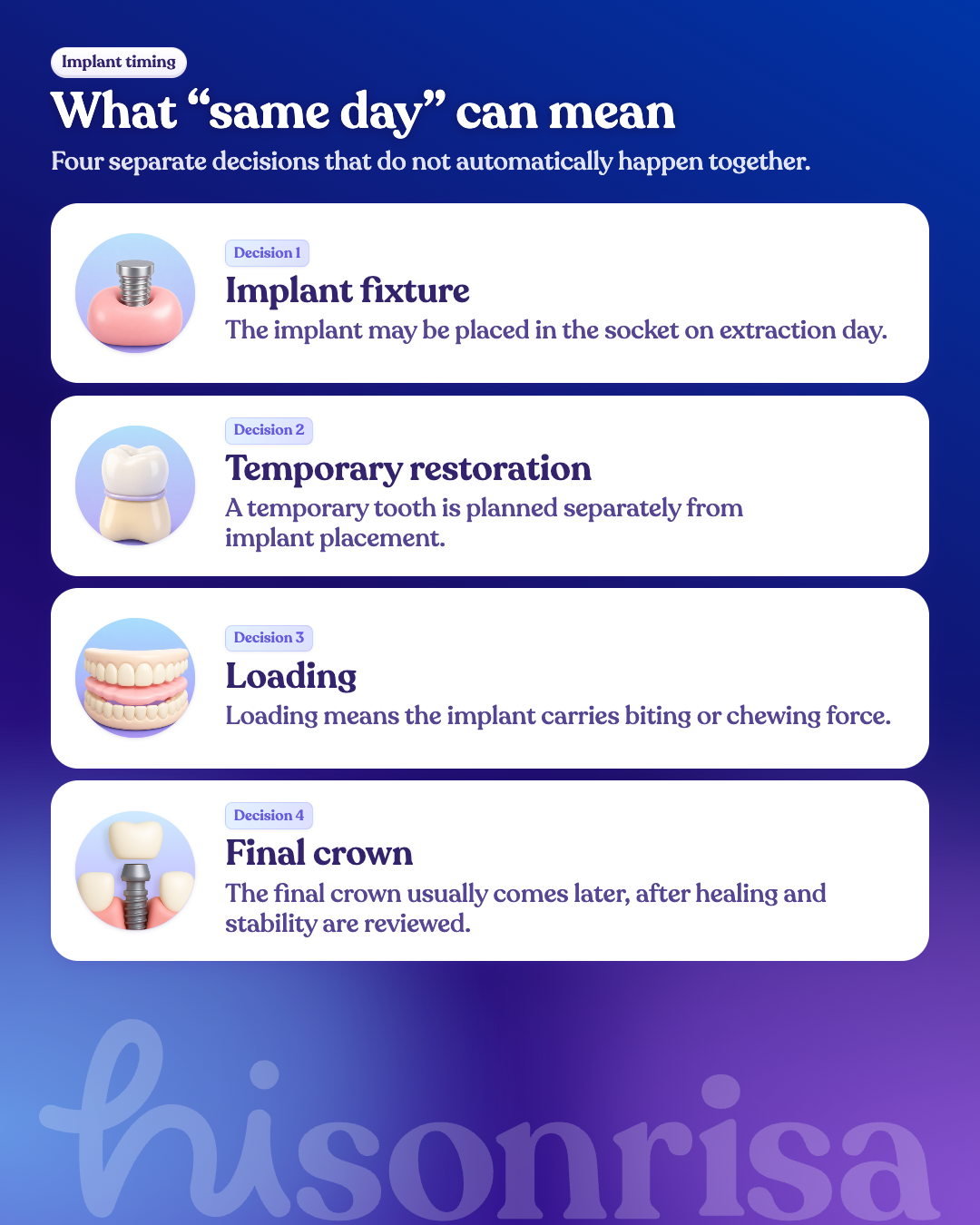
One phrase can hide four separate decisions.
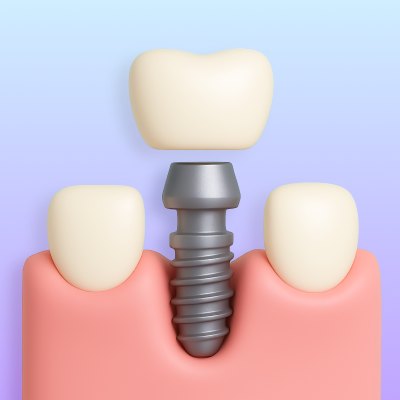
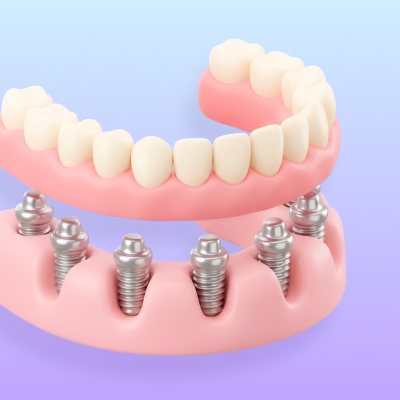
The implant fixture. Immediate placement means putting the implant into the socket on the day the tooth is removed.
A temporary restoration. A temporary tooth may be implant-supported, bonded to nearby teeth, removable, or not recommended for that site. Its availability is a separate decision from placing the implant.
Loading. Loading means the implant carries biting or chewing force. A visible provisional tooth can sometimes be designed to stay out of the bite while the implant heals.
The final crown. The definitive crown usually belongs to a later restorative phase, after the dentist has reviewed healing, stability, the bite, and the surrounding tissue.
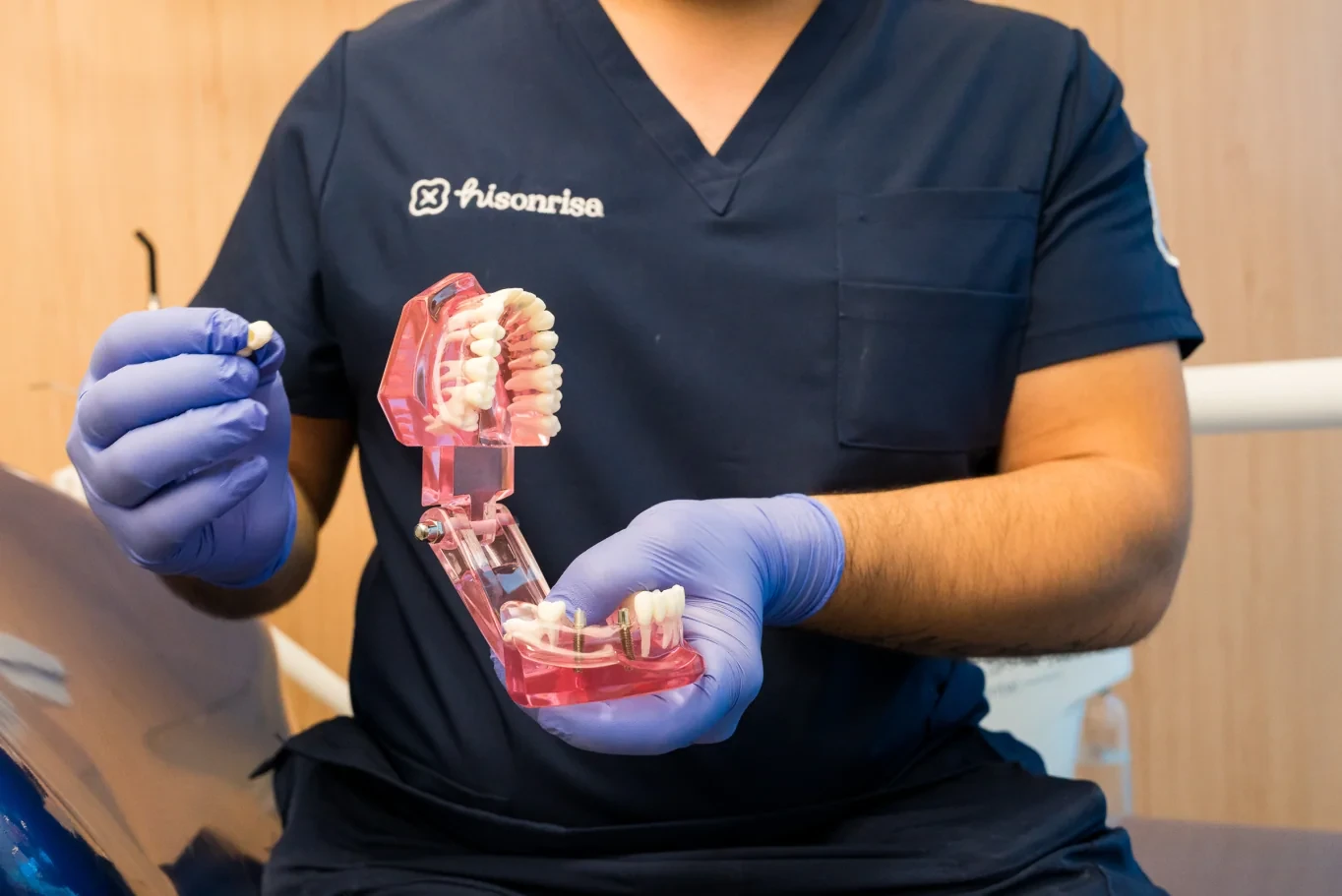
An implant can therefore be placed on extraction day while several restorative appointments still remain. Knowing which stage a clinic means by “same day” prevents confusion before treatment or travel.
What determines whether placement can happen
The dentist weighs several findings together. No single scan or checklist settles the question.
Socket walls and usable bone. The bone around the root may be intact, thin, cracked, or partly missing after extraction. That condition affects support and graft planning. The implant also needs suitable bone below or beside the socket for a secure hold.
If an older scan or previous diagnosis already mentions reduced bone, the guide to how bone loss affects implant planning explains what the dentist still needs to review before treatment or travel.
Stability in the right position. The implant needs mechanical stability where the future crown requires it. A firm implant in the wrong angle or depth can create restorative and cleaning problems, so stability by itself is not enough.
Bone and gum tissue on the visible side. The facial bone plate and gum thickness influence contour and esthetic risk, particularly around front teeth.
Infection and the condition of the site. The clinical team needs to assess the type and activity of the infection, whether affected tissue can be removed adequately, how much sound bone remains, and whether the implant can be stabilized correctly.
Your bite and health history. Clenching, smoking or nicotine use, periodontal history, medications, and health conditions can affect planning and healing.
The tooth location. Upper molars may require sinus, bone, graft, and imaging review. Lower back teeth may need careful review of available bone and nearby nerves. Front teeth and canines add soft-tissue, provisional, and crown-position concerns.
These are professional planning factors, not a scorecard for deciding at home whether you qualify.
Why the plan may change after extraction
An exam and imaging can make immediate placement look reasonable before surgery. Extraction may then reveal a cracked socket wall, a larger defect, tissue that cannot be managed as planned, or too little stability in the correct restorative position.
The dentist may then manage the site and move to an early or later implant pathway. The exact fallback may include healing, grafting, or another site-specific plan. Changing course protects the long-term result; it does not mean the team improvised or that treatment failed.
If same-day placement is being discussed, ask what the fallback would be before the appointment. You should know what you are consenting to in both pathways.
How infection and grafting affect the decision
Infection needs a case-specific assessment. A history of infection may not rule out immediate placement, but infection cannot be dismissed either. A chronic lesion and an acutely spreading problem are different clinical situations. The treating clinician must consider symptoms, the remaining bone, the socket after cleaning, and the stability available.
Spreading swelling, drainage, fever, significant pain, persistent bleeding, or rapidly worsening symptoms need prompt professional assessment. An article cannot tell you how urgent your condition is.
Grafting is also site-dependent. Bone or soft-tissue grafting may be considered during extraction or implant treatment, but it is not required for every immediate implant. It cannot preserve every bone and gum contour.
Placing the implant on extraction day does not stop the normal remodeling that follows tooth removal. The site continues to change as it heals.
When waiting may be the better plan
Implant placement may happen during extraction, after a period of soft-tissue healing, or after more substantial bone healing. The site and the treatment plan determine which pathway fits.
Waiting is an active treatment choice. Selected immediate and delayed cases can have broadly similar implant survival, but survival only tells us that the implant remained in place. It does not describe complications, gum position, esthetics, comfort, or how the final crown functions.
There is no useful universal waiting period. The timing depends on the site, the extraction findings, grafting, and individual healing. Your dentist should explain the expected range for your case and what needs to happen before the next stage.
Planning an implant evaluation in Mexico City
The biological decision is the same whether you live in Cuauhtémoc or travel from the United States. The logistics are different.
If you live in Mexico City, visits for surgery, healing checks, and restoration can be scheduled around the clinical sequence. If you are traveling, flight dates should not pressure the surgical plan. Treatment may separate implant placement from the final restorative phase. The broader guide to how many trips a dental implant may require explains how those stages can fit into a travel plan.
Sending information before the visit can make the first conversation more useful. Recent radiographs, existing three-dimensional imaging, photographs, and a summary of your health and medications may help the team identify what still needs review. Our guide to records to send before an implant consultation explains what to gather.
Preliminary review can clarify likely pathways and missing information. It cannot confirm candidacy, the condition of the socket after extraction, achievable stability, same-day placement, a temporary tooth, or a fixed number of visits. The dentist decides whether updated imaging such as CBCT is appropriate after reviewing the case.
Ask who will provide postoperative review and what happens if you have a concern after returning home. Our dental implant surgery aftercare and follow-up guidance explains the separate recovery questions worth discussing. hisonrisa can handle those planning conversations in English or Spanish.
Questions to resolve before scheduling
Bring these questions to the consultation:
- Are you considering placement during extraction or after healing, and why?
- If the implant is placed that day, will anything be attached to it or placed in the bite?
- What temporary-tooth options would fit this site?
- When might grafting be considered?
- What is the fallback if the socket is not suitable after extraction?
- Which restorative and follow-up visits come after placement?
Frequently asked questions
Is it safe to place an implant on the same day as an extraction?
It can be safe in selected cases. The decision depends on the socket, available bone, correct-position stability, surrounding tissue, infection context, and health history.
Does immediate placement mean I will leave with the final tooth?
No. Implant placement and the final crown are separate stages. A temporary restoration is also a separate decision based on stability, tissue, tooth position, and the bite.
Can an implant be placed immediately if the tooth is infected?
Sometimes, depending on the type and activity of the infection, whether the site can be managed adequately, the remaining bone, and achievable stability. Spreading swelling, drainage, fever, or rapidly worsening symptoms need prompt assessment.
Will I need a bone graft if the implant is placed the same day?
Not always. The socket condition, available bone, tissue goals, and implant plan determine whether grafting is considered.
How long might I wait if immediate placement is not appropriate?
The interval depends on the site, extraction findings, grafting, and healing. Your dentist should give you a case-specific range rather than a universal date.
Can a dentist confirm same-day placement before I travel to Mexico City?
Records may show that immediate placement is worth considering, but the final decision can depend on findings during extraction. Plan for both an immediate and a staged pathway before booking travel around treatment.
If a tooth may need removal and you want to understand the possible pathways, you can request an implant evaluation in Roma Sur. Bring the records you have, and the team can explain what is known and what still needs in-person assessment.
This article provides general dental information for patients in Mexico City and people considering care here. It does not replace a dental evaluation or diagnosis by a dentist, including imaging and professional review when needed. Seek prompt care for pain, swelling, bleeding, or symptoms that are getting worse.